 Back to Guides
Underlayment Explained: The Roofing Layer You Never See


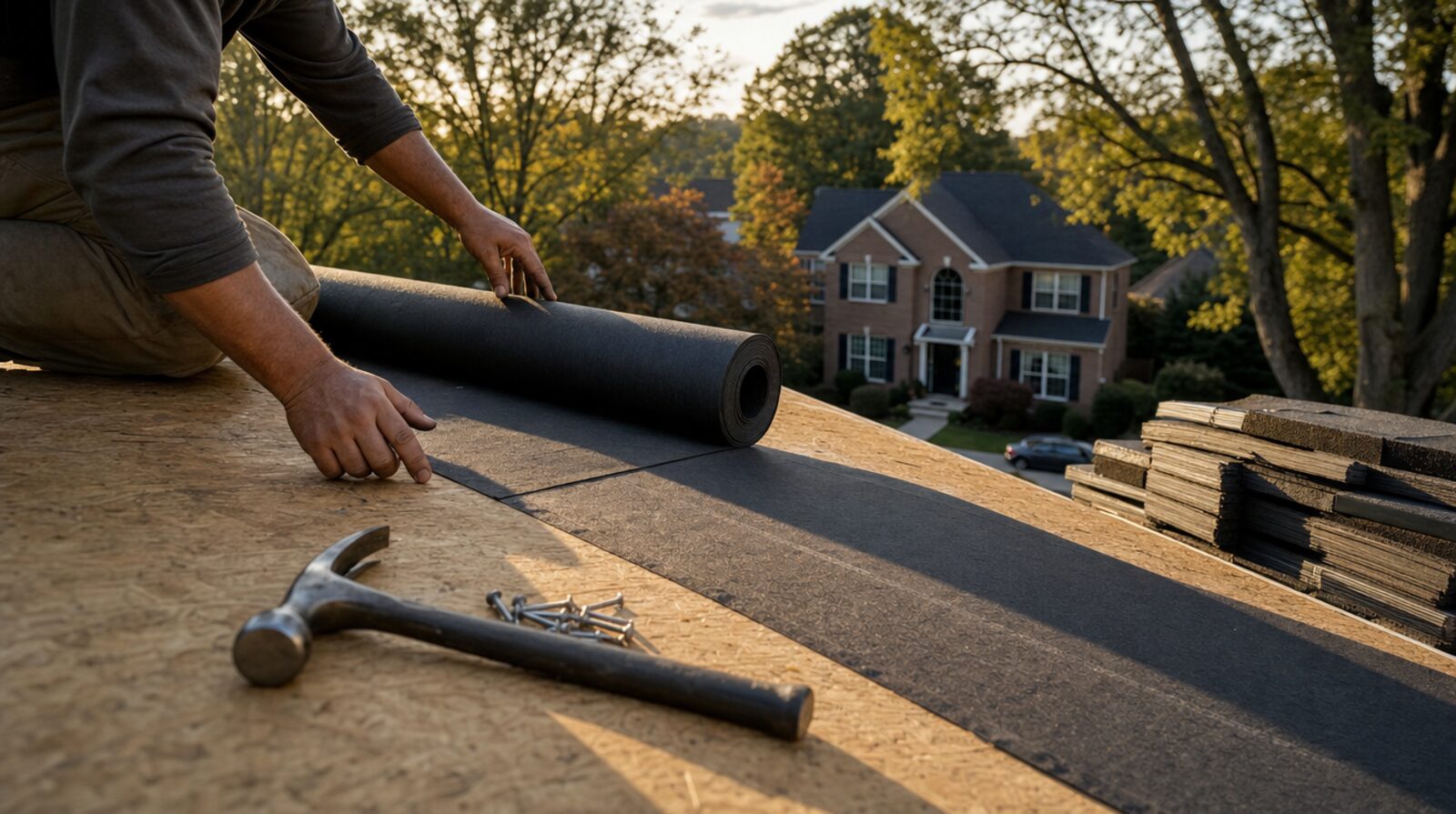
Ask most homeowners what makes a roof watertight and they'll say "the shingles." That's only half the answer. Underneath every shingle roof in Greensboro, High Point, and Winston-Salem is a second layer of protection that does the real work of keeping water out when things go wrong — and in a climate like ours, with wind-driven rain, ice in January, and summer storms that can drop an inch of water in twenty minutes, something eventually goes wrong. That layer is called underlayment, and it's arguably the most underrated material on your roof.
What Underlayment Actually Does
Shingles are your roof's first line of defense, but they're not a perfect seal. Wind can drive rain up under the tabs. Ice can back up at the eaves and push water backward against the natural downhill flow. A shingle can crack or blow off in a storm and go unnoticed for weeks. Underlayment is the backup system — a water-resistant (and in some spots, waterproof) membrane installed directly on the roof deck, before a single shingle goes on, that catches whatever gets past the shingles and directs it back out to the gutters instead of into your attic.
It also protects the bare wood deck during construction. A re-roof can take anywhere from a few hours to a couple of days depending on the size and complexity of the house, and if a pop-up thunderstorm rolls through the Triad mid-project — which happens more often than any of us would like — the underlayment is what keeps that rain from soaking into exposed plywood or OSB decking.
The Main Types We Install
Not all underlayment is the same, and the right choice depends on the part of the roof, the local climate exposure, and the roofing system going over it.
- Asphalt-saturated felt (traditional "tar paper"): The old standby, typically in 15-lb or 30-lb weights. It's affordable and has worked for decades, but it tears more easily during installation, absorbs some moisture, and can wrinkle if it gets wet before the shingles go down.
- Synthetic underlayment: Woven polypropylene or polyethylene sheets that have largely replaced felt on most jobs we do today. It's lighter, far more tear-resistant underfoot, sheds water better if a storm interrupts the install, and generally holds up longer if it's ever exposed to sun before the shingles are on.
- Self-adhering rubberized asphalt (ice-and-water shield): A sticky-backed waterproof membrane, not just water-resistant. This is the heavy-duty option reserved for the roof's most vulnerable spots.
Where Extra Protection Matters Most
On most Triad homes we don't use the same underlayment across the entire roof — certain areas get reinforced with self-adhering membrane because that's where leaks actually start:
- Eaves: The lower edges of the roof are where ice damming shows up during a hard winter cold snap, and where wind-driven rain pools during summer storms. North Carolina building code in our area generally calls for ice-and-water protection extending from the edge up past the interior wall line.
- Valleys: Wherever two roof planes meet and funnel water together, volume and velocity go up. A standard underlayment can wear through here faster than anywhere else on the roof.
- Around chimneys, skylights, and roof penetrations: Any place the roof deck is interrupted is a place water looks for a way in. Extra membrane here backs up the flashing work.
- Low-slope sections: Roofs with a shallow pitch don't shed water as quickly, so they need a more waterproof layer underneath rather than relying on gravity and shingle overlap alone.
Why This Matters When You're Comparing Quotes
If you're getting bids on a roof replacement, ask each contractor what underlayment they're using and where they're planning to reinforce it. This is one of the easiest places for a lower bid to cut corners, because once the shingles are on, nobody can see what's underneath — until it leaks. A roof with premium shingles over cheap, torn, or improperly lapped underlayment will fail faster than a roof with mid-grade shingles over a properly installed, correctly reinforced underlayment system.
A few questions worth asking:
- What underlayment brand and type are you using, and is it synthetic or felt?
- How far up from the eaves does the ice-and-water membrane extend?
- Are valleys and penetrations getting self-adhering membrane, or just the standard field underlayment?
- How is the underlayment fastened — cap nails, or staples? Cap nails hold better and don't tear through the material as easily.
Good answers to those questions tell you a lot about how a crew approaches the parts of the job you'll never see again after installation day. That's usually a solid indicator of how carefully they handle everything else, too.
The shingles get the compliments from the street. The underlayment is what keeps the ceiling dry during the next three-inch rain event. Both matter — but only one of them is doing the work when something above it fails.
Stop Guessing on Price
Get precise measurements and a detailed price range for your specific roof right now using our aerial measurement technology. No home visit required.
Get my price