 Back to Guides
The True Lifespan of an Asphalt Shingle Roof in NC's Climate


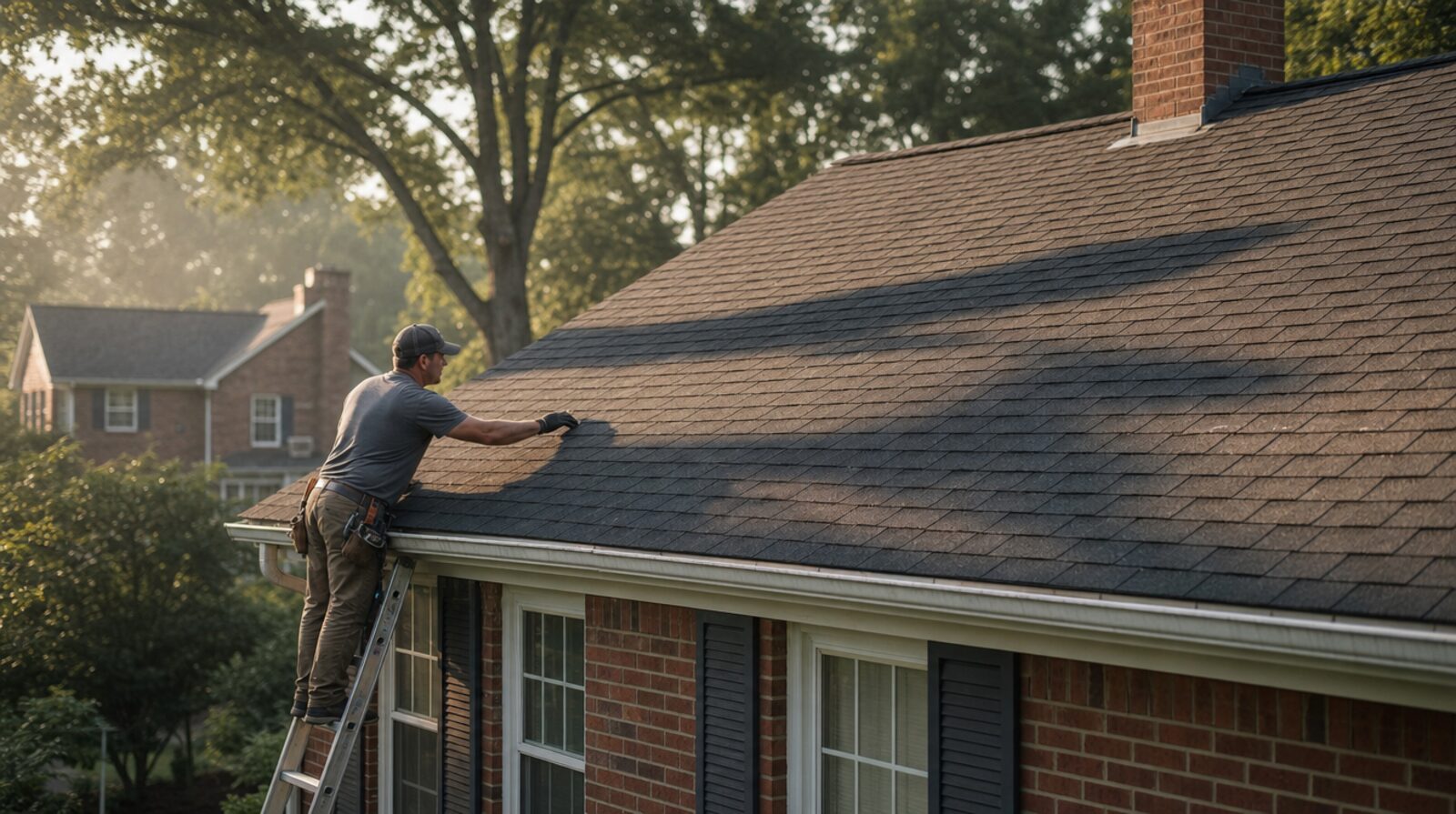
Every shingle bundle at the supply house has a number stamped on it — 25 years, 30 years, sometimes "lifetime." Homeowners take that number at face value, and we understand why. But after climbing thousands of roofs across Greensboro, High Point, and Winston-Salem, we can tell you that number is a lab estimate, not a promise. What actually determines how long your roof lasts is the fight between the shingle and the Piedmont Triad's climate — and that fight is a lot rougher than most people realize.
Why NC Shortens the Manufacturer's Number
Those lifespan ratings come from testing in fairly controlled conditions. Our climate doesn't cooperate with controlled conditions. In a typical year here, a roof deck can swing from freezing overnight temperatures in January to attic temperatures well above 150 degrees under a July sun. That constant expansion and contraction is what breaks down the asphalt's oils and flexibility over time — it's the single biggest reason a shingle rated for 25 years might show real wear at 15 to 18.
- UV exposure: The Triad gets plenty of direct summer sun, and UV radiation is what dries out asphalt shingles fastest, causing the granules on the surface to loosen and wash off in the next hard rain.
- Humidity: Our summers run humid, and that moisture gets trapped under poorly ventilated roof decks, encouraging algae streaking and, over years, accelerating the breakdown of the shingle mat underneath.
- Freeze-thaw cycles: Piedmont winters aren't brutal, but we get enough freezing nights mixed with warm days that any moisture trapped in a shingle or underlayment seam expands and contracts repeatedly, which is exactly the kind of stress that opens up small cracks into real leaks.
- Wind and storm exposure: Spring and summer thunderstorms bring gusty straight-line winds and the occasional hail event, and both can lift shingle tabs or bruise the granule layer even when there's no visible damage from the ground.
None of this means asphalt shingles are a poor choice for this area — they remain the most practical, cost-effective roofing material for the vast majority of Triad homes. It just means the number on the wrapper should be treated as a ceiling, not a guarantee.
What Actually Drives Real-World Lifespan
In our experience, four factors matter more than the brand or the warranty paperwork:
Attic Ventilation
This is the one homeowners underestimate the most. A hot, poorly ventilated attic bakes the shingles from underneath as well as the sun beating on them from above. Balanced intake at the soffits and exhaust at the ridge keeps attic temperatures closer to outdoor ambient, which slows the aging process considerably. We've opened up attics on homes with premium shingles that failed early simply because the ventilation was never sized correctly during the original build.
Installation Quality
Nail placement, proper flashing at valleys and penetrations, and correct shingle exposure all affect how a roof handles wind and water over its life. A shingle installed with nails driven too high, or flashing that relies on caulk instead of proper step flashing, will fail well before its rated lifespan regardless of the product quality.
Roof Slope and Sun Exposure
South- and west-facing slopes take the brunt of the afternoon sun in NC and consistently show more granule loss than north-facing slopes on the same house. Low-slope sections also drain slower, which means more standing moisture and faster wear in those areas.
Tree Cover and Debris
Shade sounds like a benefit, but heavy tree cover keeps shingles damp longer after rain and contributes to moss and algae growth, especially on the north side of a roof. Regular debris removal from valleys makes a real difference here.
Realistic Lifespan Ranges for the Piedmont Triad
Based on what we see coming off roofs in this region, here's a more honest range than the wrapper number:
- 3-tab shingles: Often show significant wear by year 12-15 in our climate, even though they're commonly rated for 20-25 years.
- Standard architectural (dimensional) shingles: Typically perform well for 18-22 years with decent ventilation and maintenance, against ratings of 25-30 years.
- Premium/designer architectural shingles: With good ventilation and installation, these can realistically reach 25-30 years, though they're often rated for considerably longer.
The gap between rated and real-world lifespan isn't a defect in the product — it's the difference between a lab and a Carolina summer.
Signs Your Roof Is Nearing the End
Rather than relying on age alone, walk your property a couple times a year and look for these signs, or have a contractor take a look if you're not comfortable getting on a ladder:
- Granules collecting in gutters or at downspout outlets, especially after a hard rain
- Shingle edges curling upward or tabs that look cupped rather than flat
- Bald or shiny patches where the granule layer has worn through to the asphalt
- Cracked shingles, particularly on south- and west-facing slopes
- Dark streaking (algae) or moss buildup on shaded sections
- Soft spots in the decking felt underfoot, or daylight visible through the attic roof boards
A roof showing two or three of these signs at once is usually past the point where a repair makes more sense than a replacement. One isolated issue — a cracked shingle here, a little granule loss there — is often still very repairable.
Getting the Most Out of the Roof You Have
A few habits go a long way toward closing the gap between rated and real lifespan:
- Keep gutters and valleys clear so water isn't sitting against the shingle edges
- Trim back overhanging limbs to cut down on shade, debris, and moss
- Have attic ventilation checked if you notice the upstairs runs hot in summer
- Address small leaks and flashing issues quickly, before water has a chance to reach the decking
- Schedule a visual inspection after any significant hailstorm or windstorm, even if nothing looks obviously wrong from the ground
Asphalt shingles remain a smart, budget-friendly choice for Triad homes, but the honest lifespan is written by our climate and your maintenance habits, not just the number printed on the bundle. Understanding that gap now is what keeps a small repair from turning into a full replacement down the road.
Stop Guessing on Price
Get precise measurements and a detailed price range for your specific roof right now using our AI technology. No home visit required.
Get my price