 Back to Guides
Roof Warranties Explained: Manufacturer vs. Workmanship Coverage


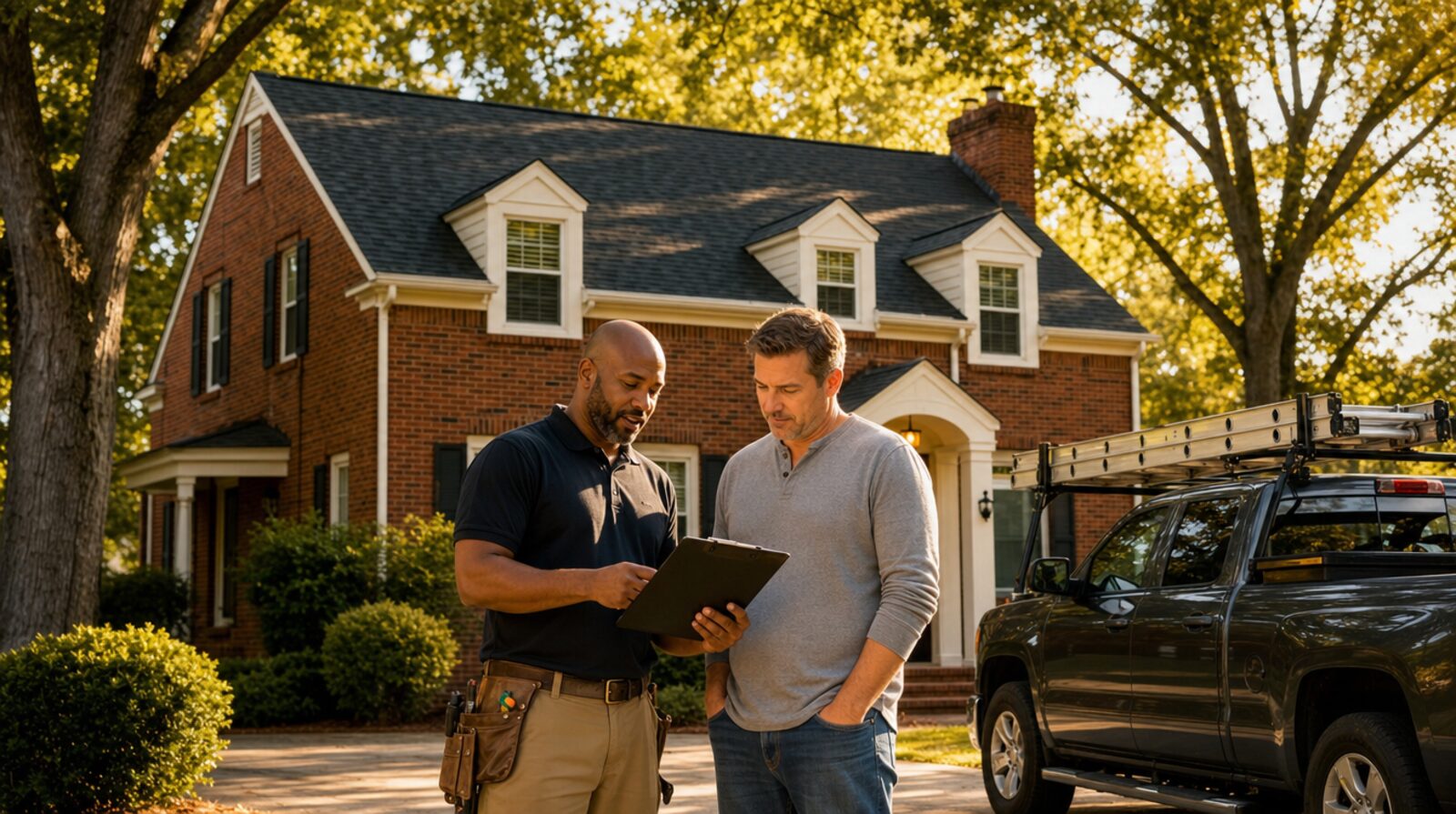
Every roofing estimate we write in the Piedmont Triad eventually gets to the same question: "So what's actually covered if something goes wrong?" It's a fair question, and it's one a lot of homeowners never get a straight answer to. Roof warranties are one of the most misunderstood parts of a roofing project, mostly because there are actually two separate warranties involved, they come from two different parties, and they cover two very different kinds of problems.
Understanding the difference before you sign a contract can save you a lot of frustration if you ever need to file a claim.
Manufacturer Warranties: Covering the Materials
The manufacturer warranty comes from the company that made your shingles, underlayment, and other roofing components — names like GAF, Owens Corning, or Malarkey. This warranty covers defects in the materials themselves: a shingle that granulates prematurely, a batch that doesn't seal properly, or a product that fails to perform the way it was designed to.
A few things are worth knowing about how these warranties actually work:
- Coverage depreciates over time. Most standard manufacturer warranties are prorated after the first several years. A shingle that fails in year 3 is treated very differently than one that fails in year 20 — you'll typically get a much smaller percentage of replacement cost covered as the roof ages.
- Enhanced warranties require specific installation steps. Manufacturers offer longer, non-prorated coverage when a roofing system uses that manufacturer's full lineup of components — shingles, underlayment, starter strip, and ridge cap all from the same product family, installed according to their specifications. Mix in off-brand components and you can quietly void the upgraded coverage without realizing it.
- It only covers the product, not the labor to fix it. A standard manufacturer warranty typically pays for replacement materials, not the cost of tearing off and reinstalling a roof. Some enhanced warranty tiers include labor coverage, but read the terms — it's not automatic.
- You have to register it, in many cases. Some upgraded warranty tiers require registration with the manufacturer within a set window after installation, along with proof that an authorized contractor did the work. Ask your contractor whether registration is being handled and get confirmation in writing.
Manufacturer warranties are also narrow in what they cover. Wind damage above the shingle's rated tolerance, damage from falling limbs, hail, or improper attic ventilation that cooks the shingles from underneath — none of that is a manufacturing defect, so none of it is covered here. This is where the second warranty comes in.
Workmanship Warranties: Covering the Installation
The workmanship warranty comes from your roofing contractor, not the shingle manufacturer, and it covers something completely different: whether the roof was installed correctly. Improper nailing patterns, flashing that wasn't sealed right around a chimney or skylight, valleys that weren't laid correctly — these are installation errors, and a manufacturer warranty won't touch them because the shingles themselves did nothing wrong.
A few practical points on workmanship coverage:
- Terms vary widely by contractor. There's no industry-standard length or scope for a workmanship warranty. One contractor's coverage might differ significantly from another's in both duration and what's included. Always ask for the specific terms in writing before work begins — never assume based on what a competitor offered.
- It only means something if the contractor is still around. A workmanship warranty is only as good as the business standing behind it. Ask how long the company has been doing roofing work in your area and whether they handle warranty callbacks directly, in-house, rather than subcontracting the fix to someone unfamiliar with the original job.
- Get it in writing, tied to your specific job. A verbal promise of "we stand behind our work" isn't a warranty. Make sure the contract or a separate warranty document specifies what's covered, for how long, and what would void it — such as later alterations by another party.
Where the Two Overlap — and Where They Don't
The gap between these two warranties is exactly where most disputes happen. Picture a roof leaking around a chimney two years after installation. If the flashing was cut and sealed incorrectly, that's a workmanship issue, and the manufacturer will point you right back to your contractor. If the underlayment itself failed due to a manufacturing defect, that's on the manufacturer, and a contractor's workmanship warranty won't cover the material cost.
This is exactly why it matters who installs your roof and how the work is documented. A qualified, licensed contractor should be able to walk you through:
- Which manufacturer warranty tier applies to your job and what triggers it
- Whether that tier requires system components beyond just shingles
- What their own workmanship warranty covers and for how long
- Who to call first if a problem shows up — them or the manufacturer
A roof with a lifetime shingle warranty and a shoddy install is still a roof that's going to leak. The paperwork on the material doesn't fix bad flashing work.
Questions Worth Asking Before You Sign
Before committing to a roofing project, it's worth getting direct answers to a short list of questions: What specific warranty tier does this installation qualify for, and does it require a full manufacturer system? Is labor included if a material defect shows up, or just the replacement product? What does the contractor's own workmanship warranty cover, and is it transferable if you sell the home? And who actually handles the claim if something goes wrong — do you call the manufacturer, the contractor, or both?
None of these questions are unreasonable, and a contractor who's confident in their work should have straightforward answers to all of them. Warranty paperwork isn't the most exciting part of a roofing project, but it's the part that matters most the first time something goes wrong — so it's worth understanding before the shingles ever go up, not after.
Stop Guessing on Price
Get precise measurements and a detailed price range for your specific roof right now using our aerial measurement technology. No home visit required.
Get my price