 Back to Guides
Is a Roof Repair Enough, or Do You Need a Full Replacement?


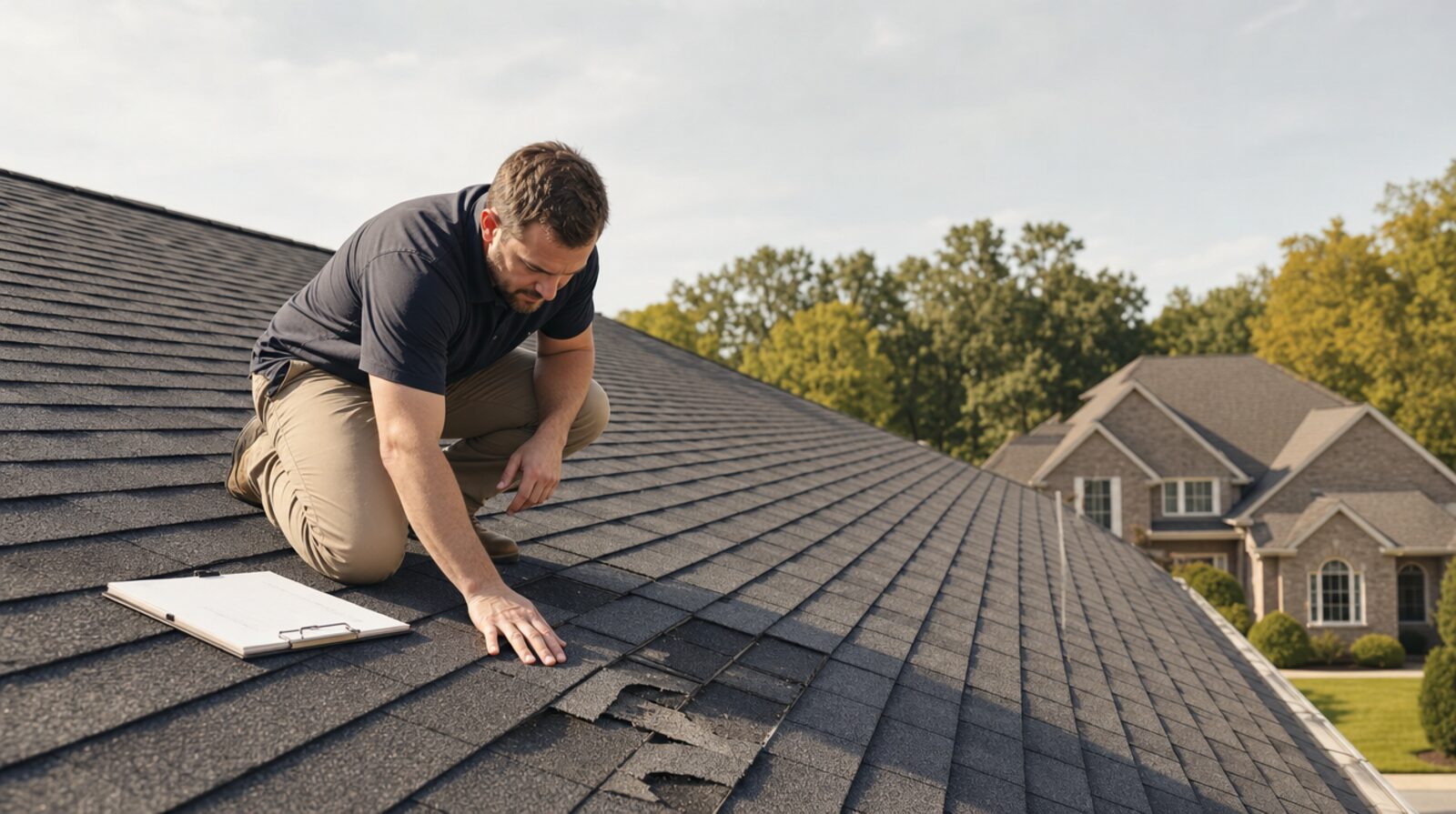
The Question We Hear on Almost Every Roof
When we climb a ladder for an inspection, the homeowner standing in the driveway usually has one question on their mind: "Can you just patch it, or am I looking at a whole new roof?" It's a fair question, and it deserves a real answer instead of a sales pitch either way. A good roofer should be willing to tell you when a repair will hold up fine — and just as willing to tell you when a repair would be throwing money at a problem that's going to come back.
The honest answer almost always comes down to three things: how old the roofing is, how widespread the damage is, and what's happening underneath the shingles where you can't see it. Here's how we walk through that decision on a real roof.
When a Repair Is the Right Call
Roofs rarely fail all at once. Most of the calls we get involve a localized problem on an otherwise sound roof, and in those cases a repair is not just cheaper — it's the smarter long-term move. Signs that point toward repair:
- Isolated damage. A handful of shingles cracked or torn loose after a windstorm, a section lifted along one edge, or a spot where a tree limb came down — if the rest of the field is in good shape, there's no reason to replace the whole system.
- The roof is under 12-15 years old. Asphalt shingle roofs in the Piedmont Triad typically have a lot of useful life left at that age. If the underlying decking is dry and the granule loss is limited to the damaged area, a repair should blend in and perform well.
- A single leak with a findable source. Leaks around a chimney, vent boot, or skylight flashing are frequently a flashing failure, not a shingle failure. Replacing or resealing flashing is a repair, not a replacement, and it's often the fix that actually stops the leak for good — a mistake we see is homeowners replacing shingles when the flashing was the real culprit.
- No signs of decking damage. If we get into the attic and the plywood is dry, free of staining, and not soft underfoot, that tells us water hasn't been getting in long enough to cause structural concerns.
A well-done repair — matched shingles, proper flashing work, correct nailing pattern — can add years of service life for a fraction of replacement cost. We'd rather do that job right than upsell a roof that doesn't need it.
When Replacement Is the Honest Recommendation
On the other hand, there's a point where repairing becomes false economy. You end up paying for labor and materials on a roof that's going to need the same repair again next season, or in a different spot. Here's what tips the scale toward full replacement:
- Age near or past the shingle's rated life. Standard three-tab shingles generally run 15-20 years; architectural (dimensional) shingles run longer, often 20-30 years depending on the product. If your roof is in that range and showing wear, a repair is a temporary patch on a system that's failing broadly, not locally.
- Damage spread across multiple sections. If we're finding cracked, curling, or missing shingles on more than one slope, that's usually a sign of age and weathering rather than one isolated event. Patching three or four separate areas often costs close to what a full tear-off would, without giving you a fresh 15-20 year clock.
- Granule loss and shingle curling across the field. Check your gutters after a hard rain — heavy granule buildup (it looks like coarse black or gray sand) means the shingles are past their protective life and drying out. Curling edges are the same story: the asphalt has lost its flexibility and is no longer sealing properly against wind-driven rain.
- Soft, spongy, or stained decking. This is the big one. If we press on the roof deck from the attic side or walking the surface and find soft spots, that plywood has been absorbing moisture, likely for a while. Repairing shingles over compromised decking doesn't fix the underlying problem — the deck has to be replaced, and at that point you're already doing a substantial part of a full replacement.
- Multiple past repairs in different spots. If you've had three different leaks patched over the last five years, that roof is telling you something. Recurring failures in different locations usually mean the underlying materials are worn out everywhere, not just where the last leak happened to show up.
What We Actually Check During an Inspection
This isn't a guessing game — it's a checklist we work through on every roof:
- Age and material type. We ask when the roof was installed and what it's covered with, since that sets our expectations before we even get on the ladder.
- Shingle condition across every slope. Not just the section with the visible leak — north-facing slopes, south-facing slopes, and anywhere shaded by trees can age at different rates.
- Flashing at every penetration. Chimneys, plumbing vents, skylights, and roof-to-wall transitions are the most common leak points, repair or not.
- The attic, if accessible. Daylight through the decking, dark staining on rafters, or damp insulation tell us more about the roof's real condition than the shingles do.
- Gutters and downspouts. Granule accumulation, plant growth, and standing water all factor into the overall diagnosis.
We'll walk you through exactly what we find, show you photos from the roof, and explain the reasoning — not just hand you a number. If a patch will genuinely solve the problem, we'll say so. If the roof has reached the point where repairs are just delaying an inevitable and more expensive replacement, we'll explain why and let you make an informed call on your own timeline.
A Note on Insurance Situations
If your damage came from a storm — hail, high wind, a fallen limb — the repair-versus-replace conversation sometimes runs alongside an insurance claim. In those cases, documentation matters as much as the diagnosis. We recommend photographing damage as soon as it's safe to do so, keeping notes on the date of the storm, and having a contractor inspect before you file so you know what you're actually dealing with. Your insurance adjuster is assessing the same roof we are, and a clear, well-documented inspection report tends to make that process smoother for everyone involved.
Whatever the cause, the goal is the same: an honest look at your roof, a clear explanation of what we find, and a recommendation that fits the actual condition of your home — not the easiest sale.
Stop Guessing on Price
Get precise measurements and a detailed price range for your specific roof right now using our AI technology. No home visit required.
Get my price