 Back to Guides
Preparing Your Roof for a North Carolina Winter


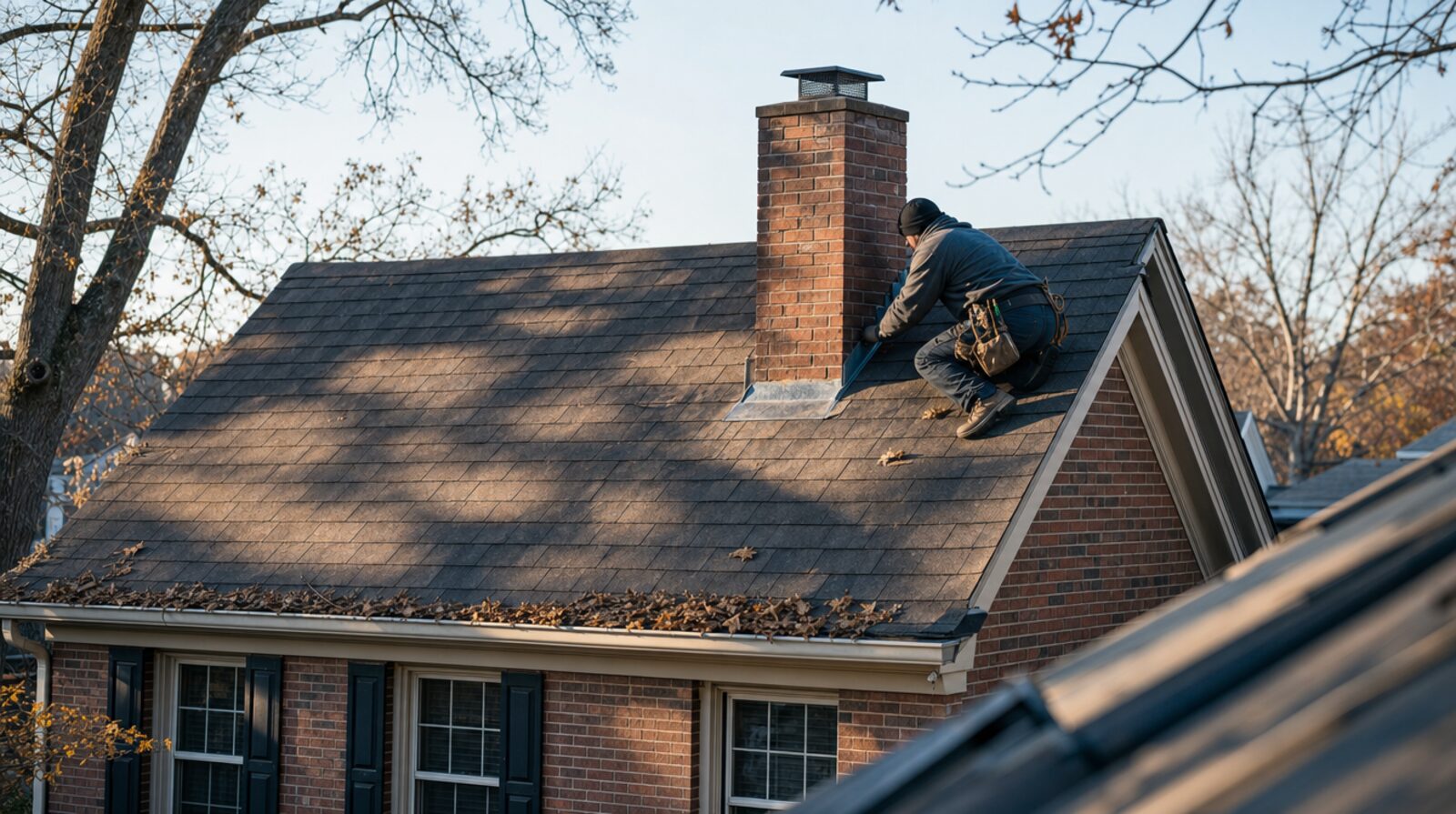
North Carolina winters don't hit like they do up north, and that's exactly what trips people up. We don't get months of steady cold that a roof can just settle into. Instead, the Piedmont Triad gets a freeze-thaw rollercoaster — a hard freeze overnight, back up into the 50s by afternoon, then an ice storm the following week. That swing is harder on a roof than a straight, predictable winter, because water gets into small cracks and gaps, freezes, expands, and widens the damage before thawing again the next day. If your roof has a weakness, a Triad winter will find it.
Late fall, before the first hard freeze, is the window to catch problems while they're still cheap to fix. Here's what we look at when we're up on a roof this time of year.
Start With the Gutters
More winter roof damage traces back to clogged gutters than almost any other single cause. When gutters back up with leaves and debris, water has nowhere to go but back under the shingles at the eaves. On a cold night that trapped water freezes, and you've got the start of an ice dam — a ridge of ice that blocks proper drainage and forces melting snow or rain up under your shingles instead of off the roof.
- Clear gutters and downspouts of leaves and debris — oak and maple leaves are still coming down through November in the Triad, so plan on doing this at least twice before winter really sets in.
- Check that downspouts direct water at least several feet away from the foundation, not just dumping it at the base of the house.
- Look for gutters pulling away from the fascia board or sagging between hangers — that's usually a sign of water sitting where it shouldn't.
- If you've got gutter guards, don't assume they mean you can skip this. Pine straw and small debris still get through most guard systems.
Walk the Roof Line From the Ground
You don't need to get on the roof yourself to do a useful inspection — in fact, we'd rather you didn't, especially once temperatures drop and shingles get brittle and slick. A pair of binoculars and a walk around the house will tell you a lot.
- Missing, curling, or cracked shingles. Look for spots where the roofline looks uneven or where you can see the darker underlayment showing through.
- Granule loss. Check your gutters and the ground below downspouts for small black or gray granules. Some loss is normal as shingles age, but heavy granule loss in one concentrated area can mean that section is wearing out faster than the rest.
- Flashing around chimneys, vents, and skylights. This is where most leaks actually start — not in the open field of the roof, but at the transitions. Look for flashing that's lifted, rusted, or has visible gaps at the seams.
- Moss or dark streaking. Common on north-facing slopes that don't get much sun. It holds moisture against the shingle and can accelerate wear over time.
- Sagging spots. A roofline that dips or looks uneven from the street is worth a closer look — it can point to deck damage underneath.
If you see any of this, or you're just not sure what you're looking at, it's worth having someone experienced take a closer look before winter weather starts stacking up problems on top of each other.
Check the Attic — It Tells You More Than the Roof Does
Some of the best clues about your roof's condition aren't on the roof at all — they're in your attic. On a cold day, or right after a cold snap, take a flashlight up there and look around.
- Daylight coming through the roof deck. Even a pinpoint of light means water can get in the same way.
- Water stains or dark spots on the underside of the decking or rafters, especially near the roof edges or around any penetrations like plumbing vents.
- Insulation that's wet, flattened, or matted down. That's often the first sign of a slow leak that hasn't shown up on your ceiling yet.
- Frost or condensation on the underside of the roof deck on cold mornings. A little is sometimes normal, but heavy frost usually points to poor attic ventilation — warm, moist air from inside the house is escaping into the attic and condensing on the cold deck. Over a winter, that moisture can rot decking and feed mold growth you won't see until it's a bigger problem.
Ventilation is worth its own mention here. A lot of older Triad homes have soffit vents that have been painted over or blocked with insulation over the years, which chokes off the airflow the attic needs. Good intake at the eaves and exhaust at the ridge keeps the attic temperature closer to the outside air, which reduces condensation in winter and helps prevent ice dams from forming in the first place.
A Few Other Things Worth Doing Before the Cold Sets In
- Trim back overhanging limbs. Ice-loaded branches break, and a falling limb does a lot more damage to a roof than the same branch would in summer. Anything hanging within a few feet of the roofline is worth cutting back now.
- Reseal exposed nail heads and pipe boots. Rubber pipe boots crack with age and UV exposure, and a cracked boot around a plumbing vent is a classic small leak that gets worse every freeze-thaw cycle.
- Have your chimney checked if you use a wood-burning fireplace — not strictly a roofing item, but chimney flashing and chimney condition go hand in hand, and it's far easier to address both at once.
- Know your roof's age. If you're not sure how old your roof is or when it was last serviced, now's a good time to find out. Asphalt shingle roofs in our climate typically hold up for a couple of decades with reasonable care, but that number varies a lot based on ventilation, installation quality, and how many freeze-thaw winters it's already been through.
When to Call Someone
A lot of what's above you can genuinely handle yourself with a ladder, a flashlight, and an afternoon. But once you're talking about actual repairs — replacing shingles, resealing flashing, fixing anything in the attic that involves the roof deck itself — that's not a great DIY project in November. Cold weather makes shingles brittle and asphalt sealant slow to bond, so repairs done in a rush during a cold snap often don't hold as well as the same repair done properly.
If your fall inspection turns up soft spots, active leaks, or damage you're not confident about, get it looked at sooner rather than later. Small roof problems are inexpensive to fix in November. The same problems, after a winter of freeze-thaw cycles working on them, are a different conversation by March.
Stop Guessing on Price
Get precise measurements and a detailed price range for your specific roof right now using our aerial measurement technology. No home visit required.
Get my price