 Back to Guides
How to Safely Inspect Your Roof After a Triad Hail Storm


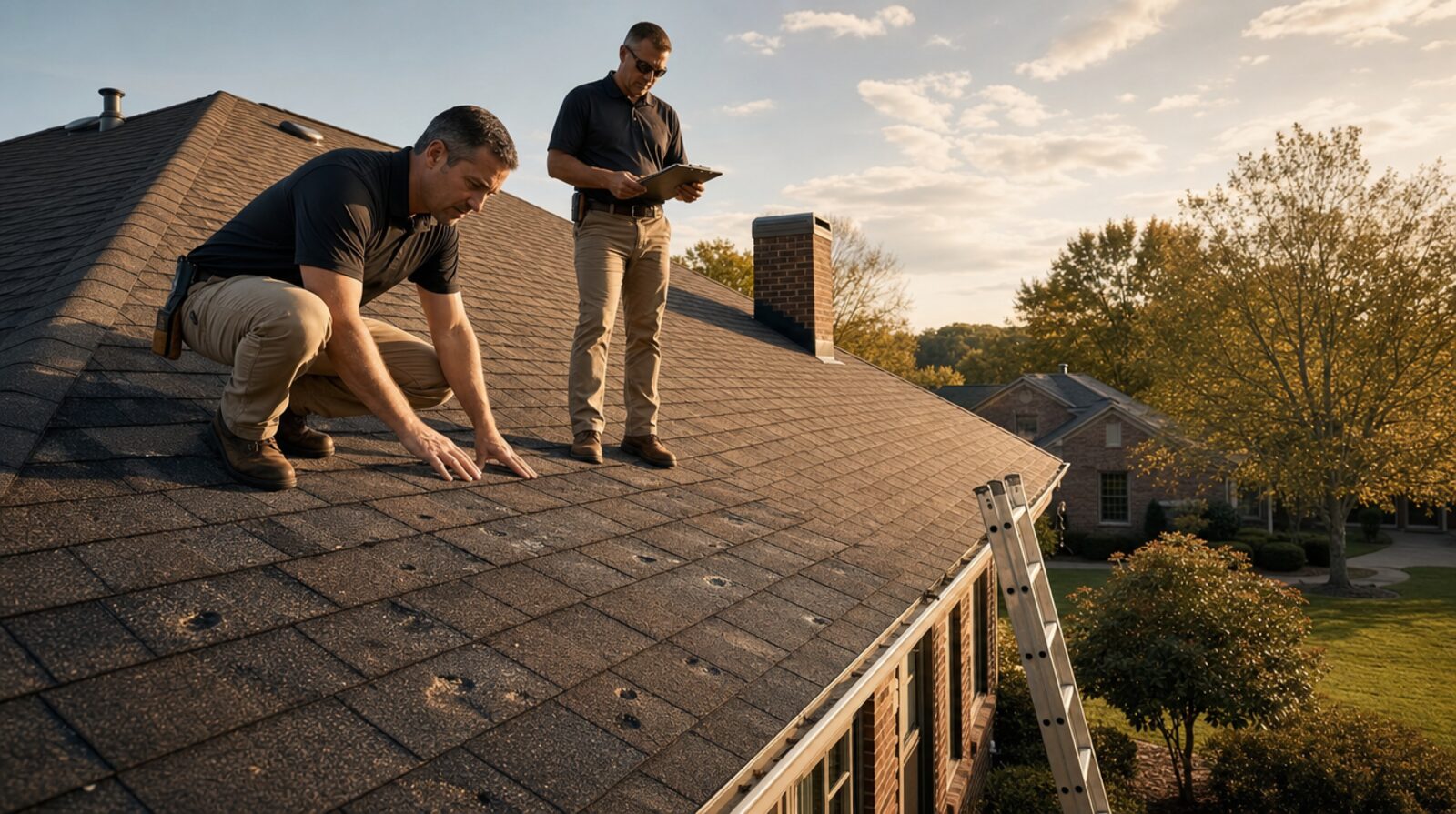
Don't Ignore the Warning Signs
When a severe hail storm rolls through Greensboro or Winston-Salem, the damage to your roof isn't always immediately obvious. Unlike a fallen tree branch, hail damage (often called "bruising") can take months to manifest into an active leak. By the time water is dripping through your ceiling, the structural damage is already done.
If you suspect your home was in the path of a recent hail storm, here is exactly how to safely assess the situation before filing an insurance claim.
Step 1: Check your yard and gutters
Look for granules (which look like dark sand) at the bottom of your downspouts. Excessive granular loss is a key indicator that hail has bruised your shingles.
Step 2: Inspect soft metals
Check your HVAC units, mailboxes, and downspouts for dents. If these metal surfaces are dented, it is highly likely your roof sustained damage as well.
Step 3: Look for bruising from the ground
Using binoculars, scan your roof for dark spots where granules have been knocked off. Do not climb on the roof yourself, as hail damage can make the surface incredibly slippery.
Step 4: Check your attic for leaks
Go into your attic during the day and look for any sunlight poking through, or check the decking for new water stains or dampness.
Step 5: Get a professional assessment
Before making any decisions, get the facts. Arthur's Roofing provides a professional storm assessment that documents visible conditions with high-resolution photos and measurements, so you know exactly where your roof stands. If you choose to file a claim, your insurance carrier determines coverage.
Stop Guessing on Price
Get precise measurements and a detailed price range for your specific roof right now using our AI technology. No home visit required.
Get my price