 Back to Guides
How Long Does a Roof Replacement Actually Take?


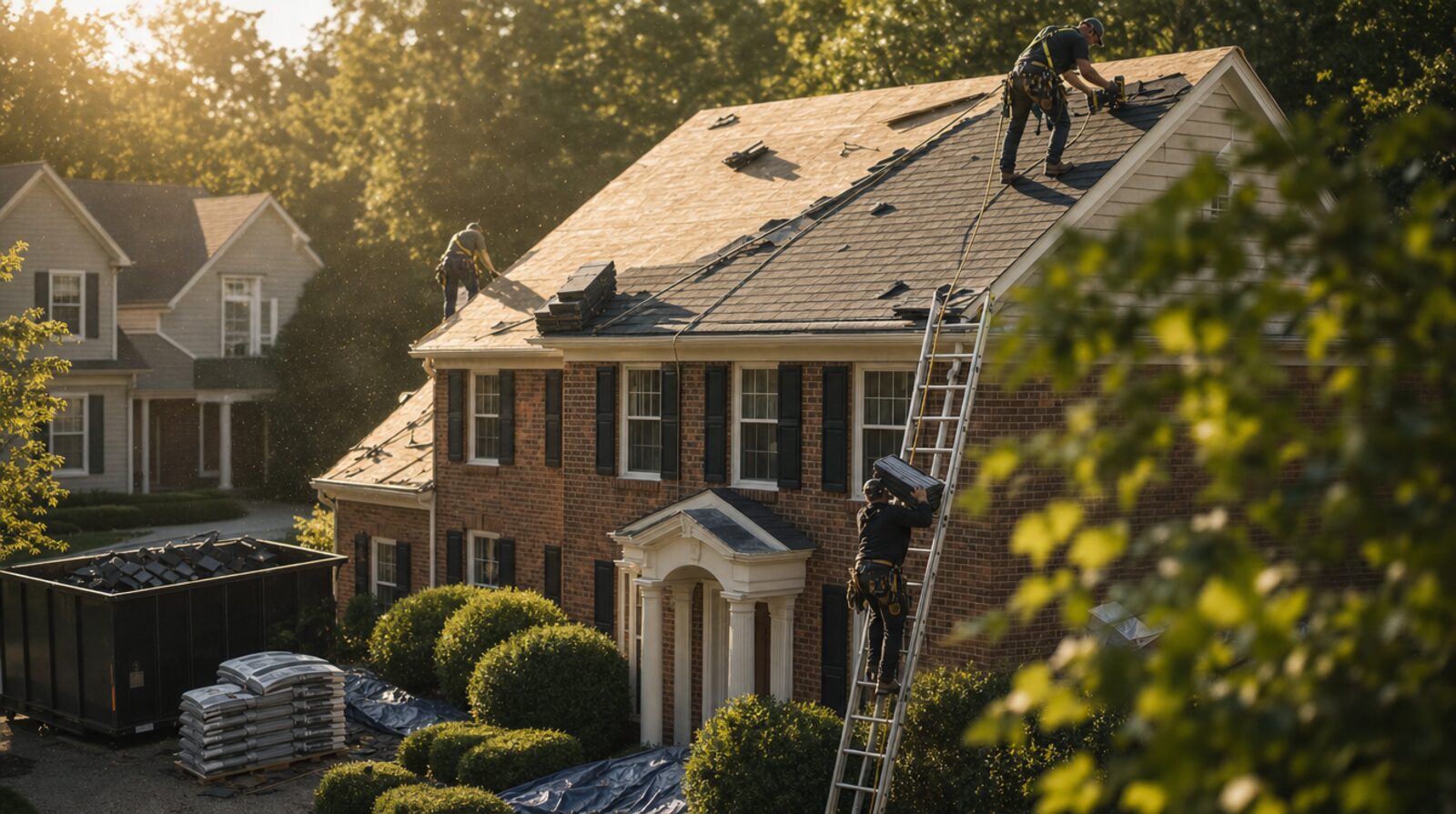
Every homeowner asks us the same question when we're up on the roof running the estimate: "How long is this actually going to take?" It's a fair question — you've got kids, dogs, cars in the driveway, and maybe a home office where every hammer strike sounds like it's landing on your desk. The honest answer is "it depends," but that's not a very useful answer, so let's break down what actually drives the timeline on a Piedmont Triad roof replacement.
The Short Answer: One to Three Days for Most Homes
For a typical single-family home in Greensboro, High Point, or Winston-Salem with an asphalt shingle roof, most tear-offs and re-roofs take one to three days from the first shingle pulled to final cleanup. A straightforward ranch or one-story home with a simple gable roof and good weather can sometimes be done in a single day. A larger two-story home with multiple roof planes, dormers, and valleys usually runs two to three days. Metal roofing, tile, or slate jobs take longer — often a full week or more — because the materials themselves require more careful, slower installation.
That said, "days on the roof" and "days until the project is fully finished" aren't the same thing. Here's what actually eats up the calendar.
What Actually Determines the Timeline
Roof Size and Complexity
We measure roofs in "squares" — one square equals 100 square feet of roof surface. A modest 20-square roof (2,000 square feet) with a simple design might take a four-person crew a single day. A 40-square roof with hips, valleys, multiple dormers, and steep pitches can easily double or triple that. Complexity slows a crew down far more than raw size does — cutting shingles around a chimney, three skylights, and a couple of dormers takes real time, and rushing that work is exactly how you end up with leaks two years down the road.
Tear-Off vs. Overlay
If your roof already has one layer of shingles and it's a candidate for an overlay (installing new shingles directly over the old layer), the job goes faster because there's no demolition or disposal. But most of the homes we work on in this area need a full tear-off — pulling every layer down to the decking — especially if there's already two layers up there, which North Carolina building code generally won't allow you to cover with a third. Tear-offs add time for stripping the old material, hauling it away, and inspecting the decking underneath for rot or soft spots that need to be replaced before new shingles go down.
Roof Pitch and Access
A steep roof isn't just harder to walk — it's slower and requires more safety rigging, which adds hours. Crews also have to factor in how easy it is to get materials up and debris down. A roof with tight side-yard access or landscaping that limits where we can stage a dumpster or run a conveyor for shingles will add time compared to a roof with a wide-open driveway.
Weather
This is the big one in our climate. Piedmont Triad summers bring sudden afternoon thunderstorms, and no reputable crew is going to nail shingles down on a wet or actively stormy roof — it's dangerous and it compromises the seal. If a storm rolls through mid-day, expect the crew to pack up, tarp any open sections, and pick back up once conditions clear. Fall and spring tend to be the most predictable stretches for scheduling, while winter cold snaps can also slow adhesive sealing on shingles, since they rely on heat from the sun to properly bond.
Material Delivery and Crew Size
Most of the delay homeowners actually experience isn't the install itself — it's the lead time before the crew shows up. Ordering the right shingles, underlayment, flashing, and ventilation components can take anywhere from a few days to a couple of weeks depending on the manufacturer and the specific product line. Crew size matters too: a larger crew working a single-day tear-off and install will always beat a two-person crew stretching the same job over four or five days.
A Realistic Week-by-Week Picture
- Inspection and estimate: Usually scheduled within a few days of your call, with the estimate itself taking about 30-60 minutes on-site.
- Material ordering: Typically a few days to two weeks, depending on shingle color and style availability.
- The install itself: One to three days for most asphalt shingle roofs; longer for metal, tile, or complex architectural roofs.
- Final walkthrough and cleanup: Same day or the day after installation wraps, including a magnetic sweep of the yard for stray nails.
All told, from your first phone call to a finished roof, most straightforward projects wrap up within two to four weeks — with the actual noisy, disruptive part of it lasting just a day or two.
How to Keep Your Project on Schedule
A few things homeowners can do to help a job move quickly and smoothly:
- Move vehicles out of the driveway the morning of the install so crews have clear access for material staging and debris removal.
- Trim back overhanging branches near the roofline ahead of time if you're able — it gives crews more working room and fewer obstacles.
- Plan for noise starting early in the morning; roofing crews typically start at daylight to make the most of dry hours.
- Ask about your specific timeline during the estimate — a good contractor should be able to give you a realistic window based on your roof's size, pitch, and material, not just a generic answer.
Every roof is a little different, but a reputable local crew should be able to walk your roof and tell you, with real confidence, how many days they expect to be up there — and why. If an estimate feels vague on timeline, that's usually worth asking more questions about.
Stop Guessing on Price
Get precise measurements and a detailed price range for your specific roof right now using our aerial measurement technology. No home visit required.
Get my price