 Back to Guides
How Insurance Adjusters Actually Evaluate Roof Damage


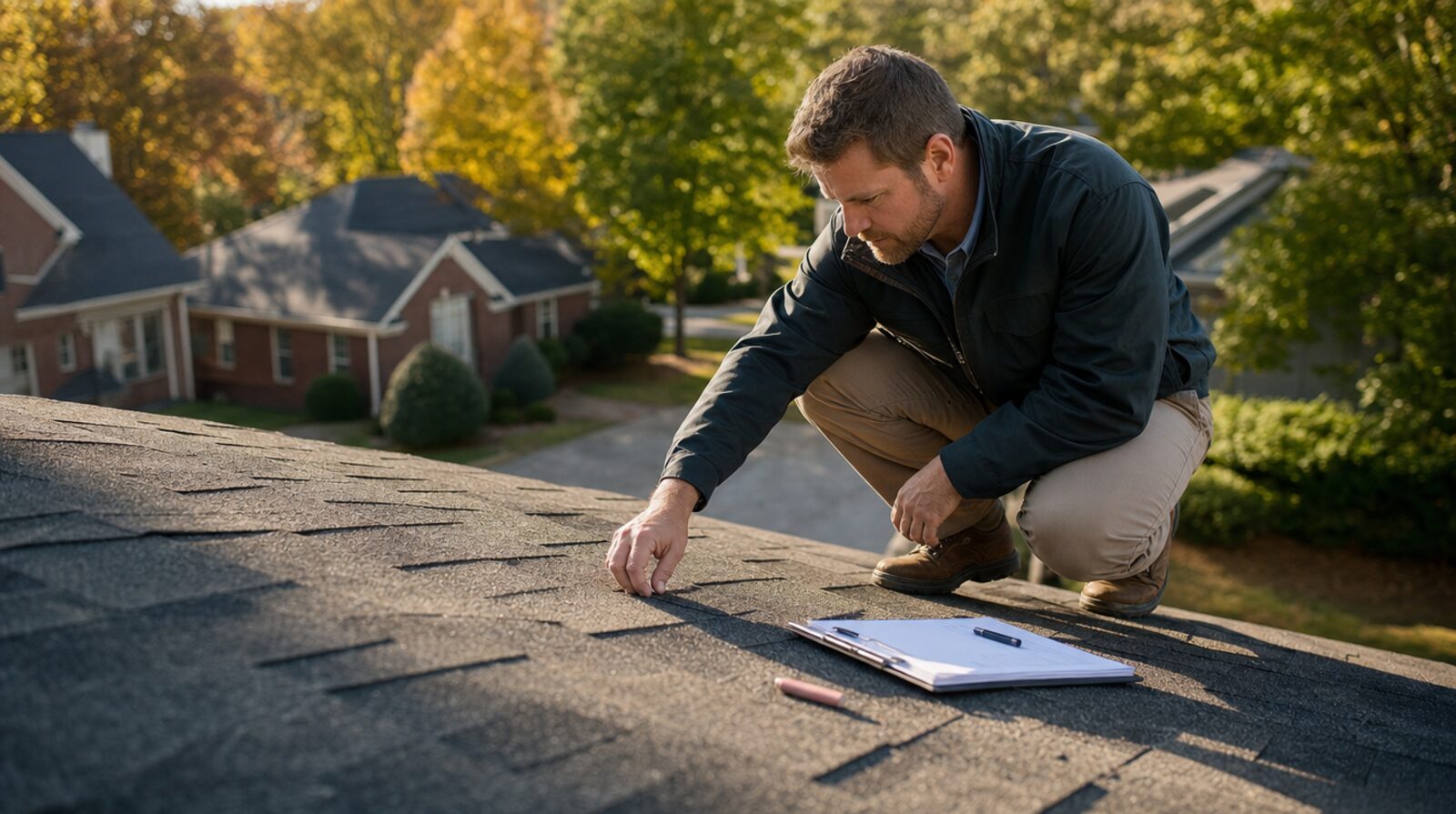
If you've never been through a roof insurance claim before, the whole process can feel like a black box. The adjuster shows up, walks around for twenty minutes, climbs a ladder, and then a few days later you get a letter that either makes sense of your damage or leaves you scratching your head. After years of meeting adjusters on rooftops all over Greensboro, High Point, and Winston-Salem, we can tell you it's not random. There's a method to it, and knowing that method helps you make sure your claim gets a fair look.
What Adjusters Are Actually Looking For
An adjuster's job isn't to find every flaw on your roof — it's to determine whether the damage present is storm-related and covered under your policy, as opposed to normal wear or age. That distinction drives almost everything they do up there.
- Hail bruising on shingles. Adjusters look for random, scattered impact marks — soft spots where the granules have been knocked loose and the mat underneath is exposed or dented. True hail hits tend to be random in pattern, not lined up in rows, and they'll often check multiple slopes because hail direction changes with wind.
- Granule loss patterns. Some granule loss is normal aging. What adjusters distinguish is loss concentrated around visible impact points versus a uniform thinning across the whole roof, which usually points to age rather than a specific storm event.
- Wind damage signatures. Creased shingles, shingles that are lifted or missing entirely, and exposed nail heads. Adjusters pay close attention to whether the damage follows a directional pattern consistent with the wind event being claimed.
- Soft metal indicators. Because shingles can be tricky to read, many adjusters check soft metals first — roof vents, flashing, gutters, downspouts, and AC housing units. Hail dents soft metal in a way that's much easier to date and confirm than shingle bruising, and it often corroborates what they're seeing on the shingle field.
- Collateral damage. Window screens, siding, deck boards, and even the mailbox. If hail dented your gutters but your siding is untouched, that's a data point. Consistent damage across multiple exterior surfaces builds a stronger overall picture of a specific storm event.
The Order of Operations on a Typical Inspection
Most adjusters we've worked alongside follow a fairly consistent routine, even if they don't announce it:
- Walk the perimeter of the house first, checking gutters, downspouts, and any soft metal at eye level before ever getting on a ladder.
- Get on the roof and establish a test square — typically a 10x10 area on each slope — and count hail hits or wind-damaged shingles within that square.
- Check all slopes, not just the one facing the storm's direction, since wind-driven hail can hit roofs from unexpected angles.
- Photograph everything — chalk marks on hail hits are common so the damage shows up clearly in photos.
- Compare findings against the reported storm date using weather data, since insurers cross-reference claims against verified hail and wind reports for that ZIP code and date.
That test-square method matters for homeowners to understand. Most insurers use a damage threshold — often somewhere around 8 hail hits within a 100-square-foot test area — to determine whether a slope qualifies for full replacement versus a repair. It's not an arbitrary number pulled from thin air; it's usually spelled out in the carrier's own claims guidelines.
What Homeowners Get Wrong
We've stood on a lot of roofs next to adjusters, and the same misunderstandings come up over and over.
"There are marks all over my shingles, so obviously it's storm damage."
Not necessarily. Blistering, mechanical scuffing from foot traffic, or algae staining can all mimic hail damage to an untrained eye. Adjusters are trained to tell the difference, and so should you be before you file — it saves everyone a headache.
"My neighbor got a new roof, so I should too."
Storms aren't uniform. Wind speed and hail size can vary block to block, and even roof-to-roof depending on slope orientation, roof age, and shingle type. Your neighbor's outcome tells you nothing definitive about your own roof's eligibility.
"I don't need to be there for the inspection."
You're allowed — and encouraged — to be present. Walk the roof with the adjuster if you're comfortable doing so, or at minimum ask them to walk you through what they found and photographed before they leave. If a contractor inspected your roof first, having those photos and notes on hand gives the adjuster a useful starting reference point.
How to Prepare Before the Adjuster Arrives
A little preparation goes a long way toward making sure nothing gets overlooked:
- Document the date of the storm and, if possible, any local news or weather service reports confirming hail or high winds in your area.
- Take your own photos of visible damage from the ground — dented gutters, displaced shingles, debris in the yard — before any cleanup happens.
- Note any interior signs of a leak, like ceiling stains or damp attic insulation, since interior damage strengthens the connection between the storm and the roof.
- Have a contractor's inspection report in hand if you've already had one done. A second set of trained eyes rarely hurts, and it gives you something to compare against the adjuster's findings.
- Clear a safe path to the roof access point and make sure any pets are secured so the inspection isn't rushed or interrupted.
Understanding how the inspection actually works won't guarantee a particular outcome, but it does mean you're not walking into the process blind. The more clearly you can describe what you're seeing — and the more organized your documentation is — the smoother the whole conversation with your carrier tends to go.
Stop Guessing on Price
Get precise measurements and a detailed price range for your specific roof right now using our AI technology. No home visit required.
Get my price