 Back to Guides
Hail Damage 101: What It Looks Like and Why It's Easy to Miss


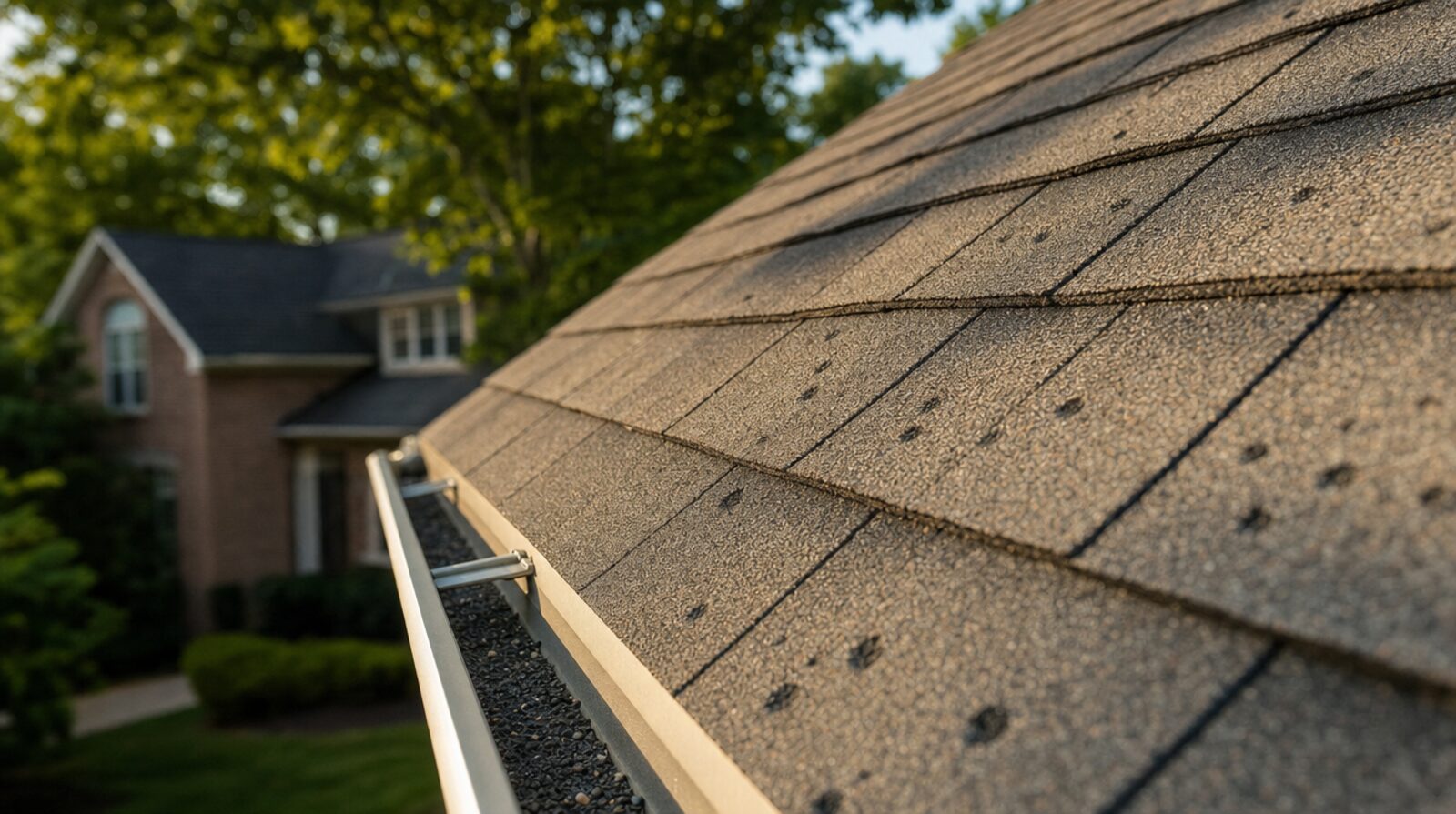
Why Hail Damage Doesn't Look Like You Think It Should
Most homeowners picture hail damage as something dramatic — cracked shingles, dented gutters, maybe a hole punched clean through the roof deck. After a storm rolls through the Piedmont Triad, that's rarely what we find when we climb up to look. Hail damage is usually subtle, and that's exactly why it gets missed.
Asphalt shingles are designed to flex. When a hailstone hits one, the shingle usually doesn't crack or tear on impact — it bruises. The granules embedded in the shingle's surface get driven down into the asphalt mat underneath, and that mat gets compressed or fractured in a small circular spot. From the ground, or even from a quick walk across the roof, that spot can look like nothing more than a bit of discoloration. Give it twelve to eighteen months of sun and rain, though, and that bruise is where the shingle starts to fail — granules wash away, the mat underneath is exposed to UV, and a soft spot turns into a leak.
That delay is the whole problem. Hail damage is rarely an emergency the day it happens. It's a slow leak waiting to happen, which means most people never connect a roof leak eight months later back to the hailstorm that caused it.
What to Actually Look For
You don't need to get on a ladder to start checking — and honestly, we'd rather you didn't, since a hail-damaged roof deck can be softer underfoot than it looks. Start with what you can see from the ground and work your way up:
- Gutters and downspouts. Aluminum dents easily, so dings, dimples, or small dents along the gutter line are often the first visible clue that hail hit hard enough to matter.
- Window screens and siding. Torn screens, chipped paint on window sills, or small impact marks on vinyl siding tell you the size and force of the hail that fell — useful context before you even look at the shingles.
- AC unit fins and exposed metal. The thin aluminum fins on an outdoor air conditioning unit dent easily and hold an impression far longer than a shingle does. If those fins are dinged up, assume the roof took a similar beating.
- Soft spots or random dark patches on shingles. From the ground with binoculars, look for randomly scattered dark blotches — not a pattern, not a straight line, just scattered spots where granules look thinner or the shingle surface looks slightly different than the shingles around it.
- Granules collecting in gutters or at downspout outlets. Every shingle sheds a few granules over time, but a noticeable pile of granules — especially right after a storm — is a strong sign of fresh impact damage.
- Soft or spongy metal flashing. Flashing around chimneys, vents, and skylights is thinner than shingles and dents more visibly. Small round dents in flashing are often easier to spot than the same-size impact on a shingle.
If you see two or three of these signs together, that's usually enough reason to have someone who knows what they're looking for get up on the roof and check the shingles directly, mat by mat.
Why It's So Easy to Confuse With Normal Wear
Part of what makes hail damage tricky is that it can look a lot like ordinary aging. Shingles naturally lose granules over the years, especially on south- and west-facing slopes that take the brunt of the North Carolina sun. Blistering from heat, scuffing from foot traffic during a prior repair, and just plain age can all produce spots that look similar to hail bruising to an untrained eye.
The difference is in the pattern. Hail damage tends to be random and scattered rather than following the lines of sun exposure or foot traffic. It also tends to show up on multiple slopes of the roof at similar severity, since hail doesn't care which direction your roof faces the way the sun does. A trained eye checks the mat underneath the granule loss — press gently on a suspect spot, and true hail bruising often has a slightly different give to it than a spot that's just lost granules from age.
A good rule of thumb: if a storm dropped hail large enough to dent your mailbox post or strip leaves off the trees in your yard, it's worth having your roof looked at — even if nothing looks obviously wrong from the driveway.
Timing Matters More Than People Realize
Most insurance policies have a window for filing a storm damage claim, and that window starts ticking from the date of the storm, not the date you noticed a leak. Waiting until you see water stains on a ceiling means you're filing months — sometimes over a year — after the damage actually occurred, which can complicate a claim even when the damage is clearly storm-related.
If you know a hailstorm came through your neighborhood, whether or not you saw obvious damage at the time, it's worth having your roof checked within a few weeks rather than waiting for a leak to tell you something's wrong. Catching a bruised shingle before it fails is a much simpler conversation than dealing with interior water damage after the fact.
Stop Guessing on Price
Get precise measurements and a detailed price range for your specific roof right now using our aerial measurement technology. No home visit required.
Get my price