 Back to Guides
Gutter Replacement vs. Repair: Signs It's Time for New Gutters


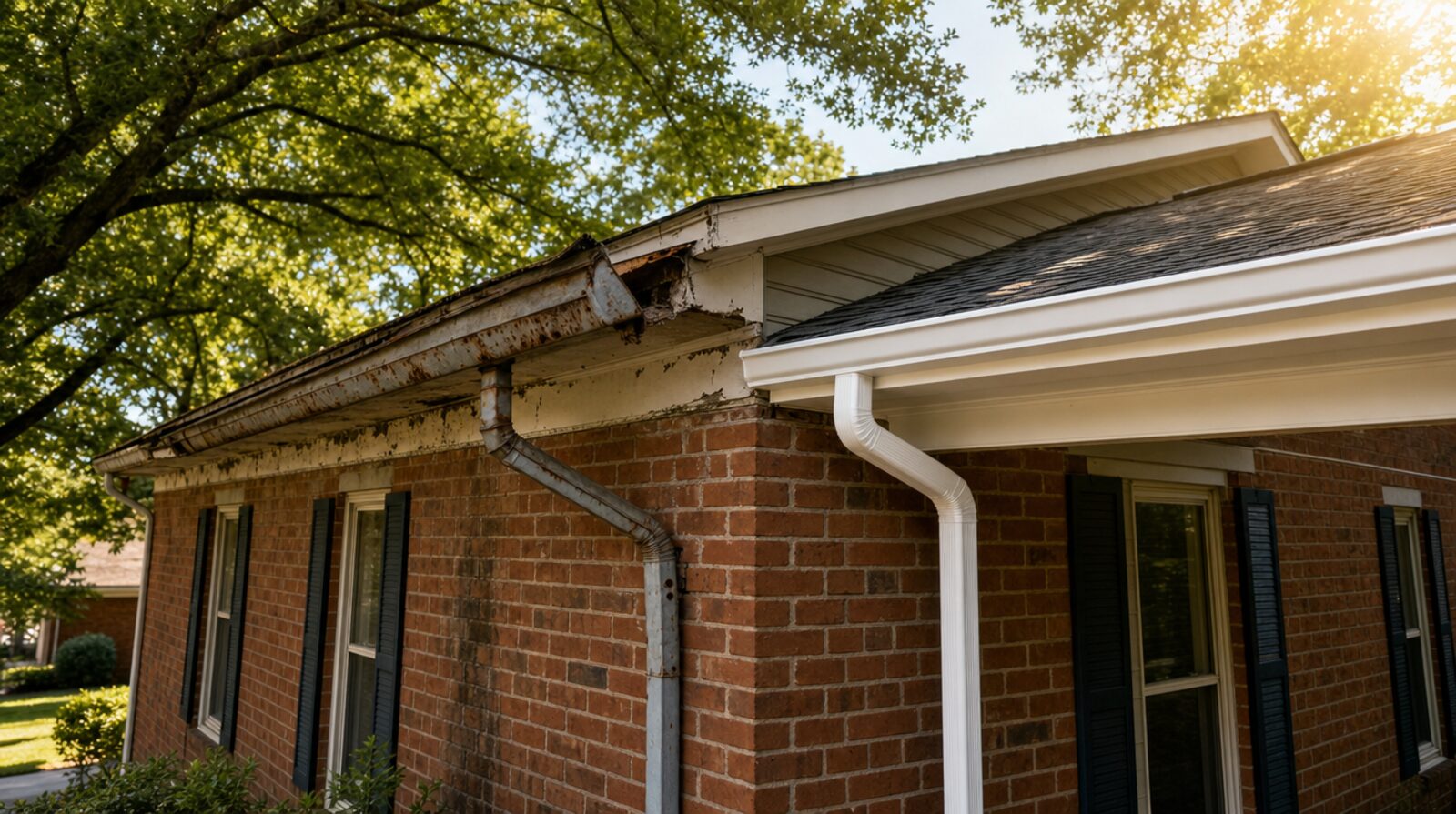
Gutters don't get much attention until they fail — and by then, the damage usually isn't limited to the gutters themselves. After years of servicing roofs across Greensboro, High Point, and Winston-Salem, we can tell you that gutter problems are one of the most common reasons we get called out to look at fascia rot, siding stains, and even foundation issues that homeowners assumed were unrelated. The good news is that gutters usually give you plenty of warning before they quit. Knowing what to look for helps you decide whether a repair will hold or whether it's time to replace the system.
Signs a Repair Will Still Do the Job
Not every gutter problem means a full replacement. Gutters are a serial system — sections, hangers, end caps, and downspouts — so a lot of issues are localized and fixable without tearing the whole thing off the house.
- Isolated leaks at seams or joints. Sectional gutters (the kind sold in strips at home improvement stores) rely on sealant at every joint, and that sealant dries out and cracks over time, usually starting around 8-10 years in. Reseaming a joint is a quick fix.
- Sagging in one or two spots. If a short run of gutter has pulled away from the fascia because a couple of hangers failed, that's a hardware problem, not a system problem. Adding hidden hangers every 24 inches (tighter than the original spacing, which is often 32-36 inches) usually solves it for good.
- Minor dents or dings. Cosmetic damage from a ladder, a falling limb, or hail doesn't affect drainage and rarely justifies replacement on its own.
- Clogs and debris buildup. This isn't a repair at all — it's maintenance. But homeowners often mistake an overflowing, debris-packed gutter for a failing one. Clean it out before you assume the worst.
- A downspout that's come loose or is draining too close to the foundation. Re-securing straps or adding an extension is inexpensive and solves what looks like a bigger problem.
If what you're seeing fits into one of these categories, a licensed contractor can usually patch, reseal, or re-hang the affected section and get another several years out of the system.
Signs It's Time for New Gutters
Some damage points to a system that's past the point of patching. Here's what tells us a homeowner needs a full replacement rather than another repair.
- Rust, corrosion, or holes spread across multiple sections. Once metal gutters start rusting through in more than one spot, sealing each hole individually is a losing game — new holes will keep appearing.
- Pulling away from the house along most of its length rather than in one or two spots. This usually means the fascia board underneath has softened from years of water intrusion, and hangers simply won't hold anymore no matter how many you add.
- Visible cracks or splits in the gutter trough itself, especially in older aluminum or steel systems. Cracks widen with every freeze-thaw cycle we get through a Piedmont winter, and they don't stay small.
- Paint peeling or bubbling on the gutter's underside, or water stains streaking down the fascia and siding. This tells you water is overflowing the back edge of the gutter instead of draining through the downspout — a sign the pitch has failed or the gutters are undersized for your roof's water volume.
- Water pooling near the foundation after every rain, even with clean gutters and properly placed downspouts. If the system can't move water away from the house anymore, it's not doing its one job.
- Mildew, mold, or a musty smell in the basement or crawl space that shows up seasonally. That's often the first indoor sign that gutters have been failing outdoors for a while.
- The gutters are simply old. Aluminum gutters typically last a couple of decades with reasonable maintenance; galvanized steel a bit less due to rust. If yours are approaching or past that range and showing more than one of the issues above, patch jobs stop being cost-effective.
Why the Distinction Matters More Than It Seems
Gutters are cheap insurance for the rest of your house. A gutter system that's overflowing or pulling away doesn't just look bad — it dumps water directly against your fascia, soffit, and siding every time it rains, and over a season or two that moisture works its way into wood framing that's far more expensive to replace than the gutters themselves. We've opened up fascia boards that looked fine from the ground and found them soft as cardboard because a gutter had been silently overflowing behind them for a couple of years.
The other reason to get this right: gutters and roofing work together. If you're already having roof work done — a repair, a partial re-roof, or new shingles — it's worth having your gutters inspected at the same time. Removing and reinstalling gutters is part of a proper roof replacement anyway, and it's much more efficient to address failing gutters in the same visit than to schedule a second project once you notice the staining six months later.
What to Check Before You Call Someone
A quick walk around the house after a hard rain tells you most of what you need to know. Look for water sheeting over the gutter's front edge instead of channeling into it, check whether downspouts are actively draining or just dribbling, and glance at the fascia line for gaps where the gutter has separated from the house. Note how many spots show problems — one or two localized issues point toward repair, while damage spread across most of the run points toward replacement.
When in doubt, have a contractor take a look before committing either way. An experienced eye can usually tell within a few minutes whether you're looking at a $150 fix or a system that's earned its retirement, and getting that assessment right saves you from either overspending on a full replacement you didn't need or underspending on a patch that fails again by next spring.
Stop Guessing on Price
Get precise measurements and a detailed price range for your specific roof right now using our aerial measurement technology. No home visit required.
Get my price