 Back to Guides
Flashing 101: The Small Metal Pieces That Prevent Big Leaks


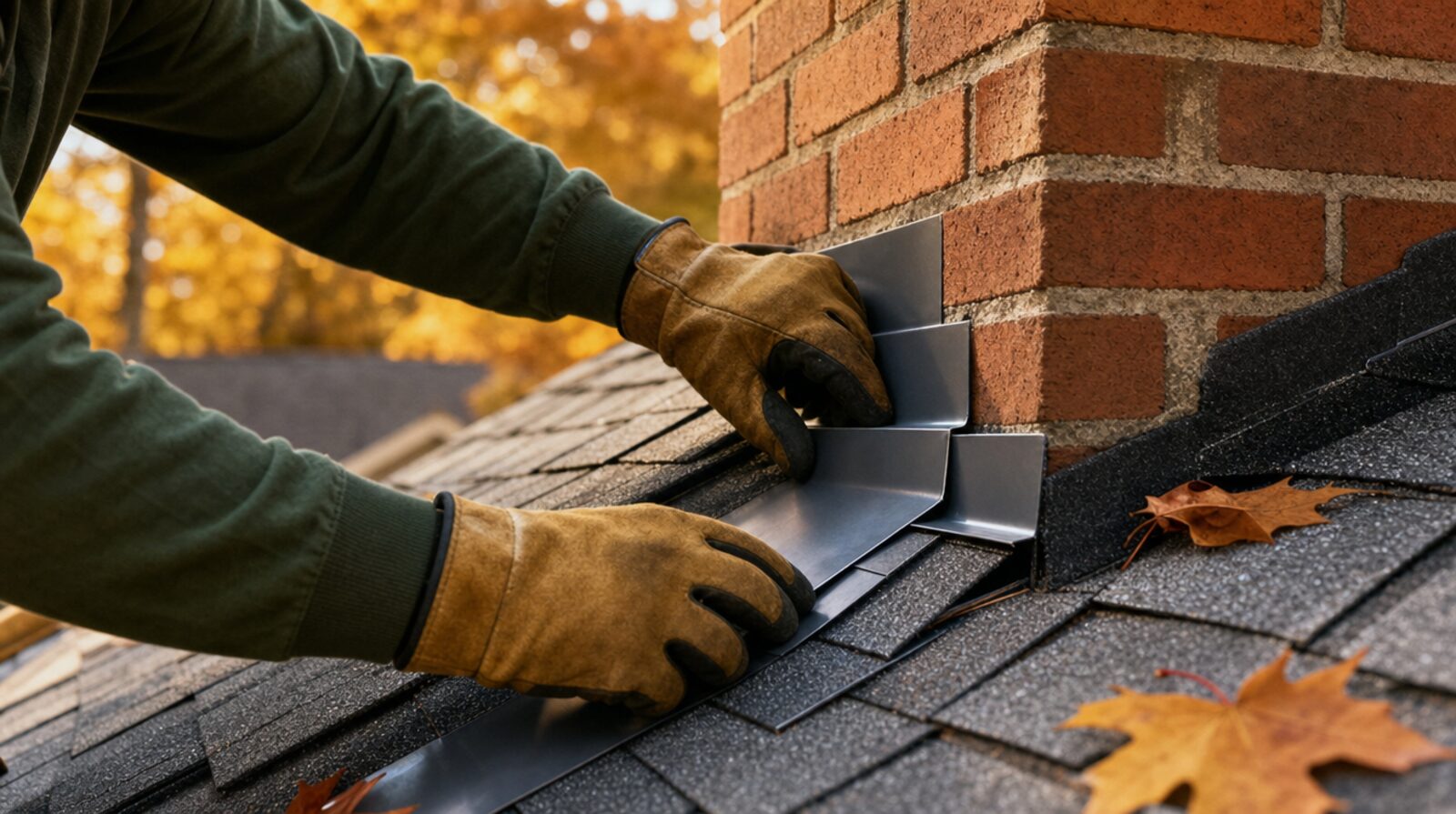
Ask most homeowners what causes a roof leak and they'll say "a bad shingle." After thousands of Triad roofs, we can tell you the truth is usually more specific: it's the flashing. The shingles do the broad work of shedding water off a big open plane. Flashing does the hard work — sealing every place where that plane gets interrupted. Chimneys, skylights, sidewalls, valleys, vent pipes. Every one of those is a hole in an otherwise simple system, and flashing is what closes it.
Most leaks we get called out for in Greensboro, High Point, and Winston-Salem aren't shingle failures at all. They're flashing failures — a piece that rusted through, pulled loose, or was never installed correctly in the first place. So let's talk about what flashing actually is, where it lives on your roof, and what to look for.
What Flashing Actually Does
Flashing is thin metal — usually galvanized steel, aluminum, or copper — formed and installed at the seams and transitions of a roof to keep water from working its way underneath the roofing material. Shingles are designed to overlap and shed water downhill in a straight run. The moment you introduce a chimney, a wall, a pipe, or a change in roof plane, that straight run breaks, and water needs a different path around the obstacle. Flashing creates that path.
Think of it less as a patch and more as a piece of the roof's plumbing. It's woven into the shingle courses as the roof is built, not slapped on top afterward. That distinction matters a lot, and it's one of the first things we check when we're asked to look at a leak on an older home — was the flashing actually integrated into the roofing, or was it caulked on as an afterthought?
The Five Places Flashing Does the Most Work
- Valleys. Where two roof planes meet and funnel water downward, valleys carry more runoff per square foot than almost anywhere else on the roof. Open metal valleys or woven-shingle valleys both depend on solid flashing underneath to handle that volume without backing up under the shingles.
- Chimneys. A chimney needs flashing in three parts — step flashing up each side, a saddle (or cricket) on the uphill side to divert water around the chimney instead of pooling against it, and counter-flashing set into the mortar joints to cap everything and keep water from running down behind the step flashing.
- Sidewalls and headwalls. Anywhere a roof plane runs into a vertical wall — a dormer, an addition, a second story — needs step flashing woven course by course up the wall line. A continuous strip of caulk is not a substitute; it dries out and cracks long before the roof does.
- Vent pipes and roof penetrations. Plumbing stacks, exhaust vents, and similar penetrations use a flashing boot — a metal base with a rubber or neoprene collar that seals tight around the pipe. The rubber collar is usually the first thing to fail, often years before the metal base does.
- Roof-to-roof transitions and skylights. Any change in roof pitch or direction needs flashing to bridge the seam. Skylights typically come with a manufacturer flashing kit that has to be installed exactly to spec — improvising here is one of the more common causes of a "mystery leak" that only shows up in heavy, wind-driven rain.
Why Flashing Fails Before the Rest of the Roof Does
Metal flashing generally outlasts asphalt shingles, but it fails in specific, predictable ways, and it's worth knowing what they look like from the ground or from a ladder at the gutter line:
- Sealant breakdown. Any flashing detail that relies on caulk or roofing cement as its primary seal — rather than as a secondary backup to proper metalwork — is going to need attention. NC's swing between summer heat and winter freeze cycles caulk hard, and it typically needs to be inspected and refreshed well before the shingles themselves show wear.
- Rust and corrosion. Galvanized flashing can rust through over time, especially where it sits in a valley and holds water and debris longer than the surrounding roof. Streaking or a reddish-brown stain running down the roof plane below a valley or chimney is often the first visible sign.
- Nail pops and lifted edges. Flashing that was fastened with exposed nails instead of concealed fasteners under the shingle line is more prone to working loose over time as the roof deck expands and contracts with temperature swings.
- Rubber boot cracking. The rubber collar on a pipe boot is the single most common flashing-related leak point we see, full stop. It sits in direct sun for years and eventually splits at the base of the pipe. This is a small, inexpensive fix if it's caught early and a soggy attic deck if it isn't.
What to Look For From the Ground
You don't need to get on the roof to spot early warning signs. From the yard or a second-story window, look for:
- Streaking or discoloration on shingles directly below a chimney, valley, or sidewall.
- Visible gaps or daylight where a step-flashed wall meets the roofline.
- Caulk that looks chalky, cracked, or has pulled away from the metal.
- Rust stains bleeding down from a valley or pipe boot.
- Any soft spot, discoloration, or musty smell on a ceiling directly below one of these features — that's often the first indoor sign of a flashing leak that's already been running for a while.
Flashing is inexpensive compared to shingles, but it takes real craftsmanship to get right — it has to be layered into the roofing system correctly, not bolted on after the fact. When we inspect a roof, the flashing details are where we spend a disproportionate amount of our time, because that's where the roof's actual weak points tend to live. A good roof isn't just good shingles. It's good shingles paired with flashing that was cut, formed, and woven in correctly the first time.
Stop Guessing on Price
Get precise measurements and a detailed price range for your specific roof right now using our aerial measurement technology. No home visit required.
Get my price