 Back to Guides
Choosing a Roof Color: Resale Value, HOA Rules, and Curb Appeal


Why Roof Color Is a Bigger Decision Than It Looks
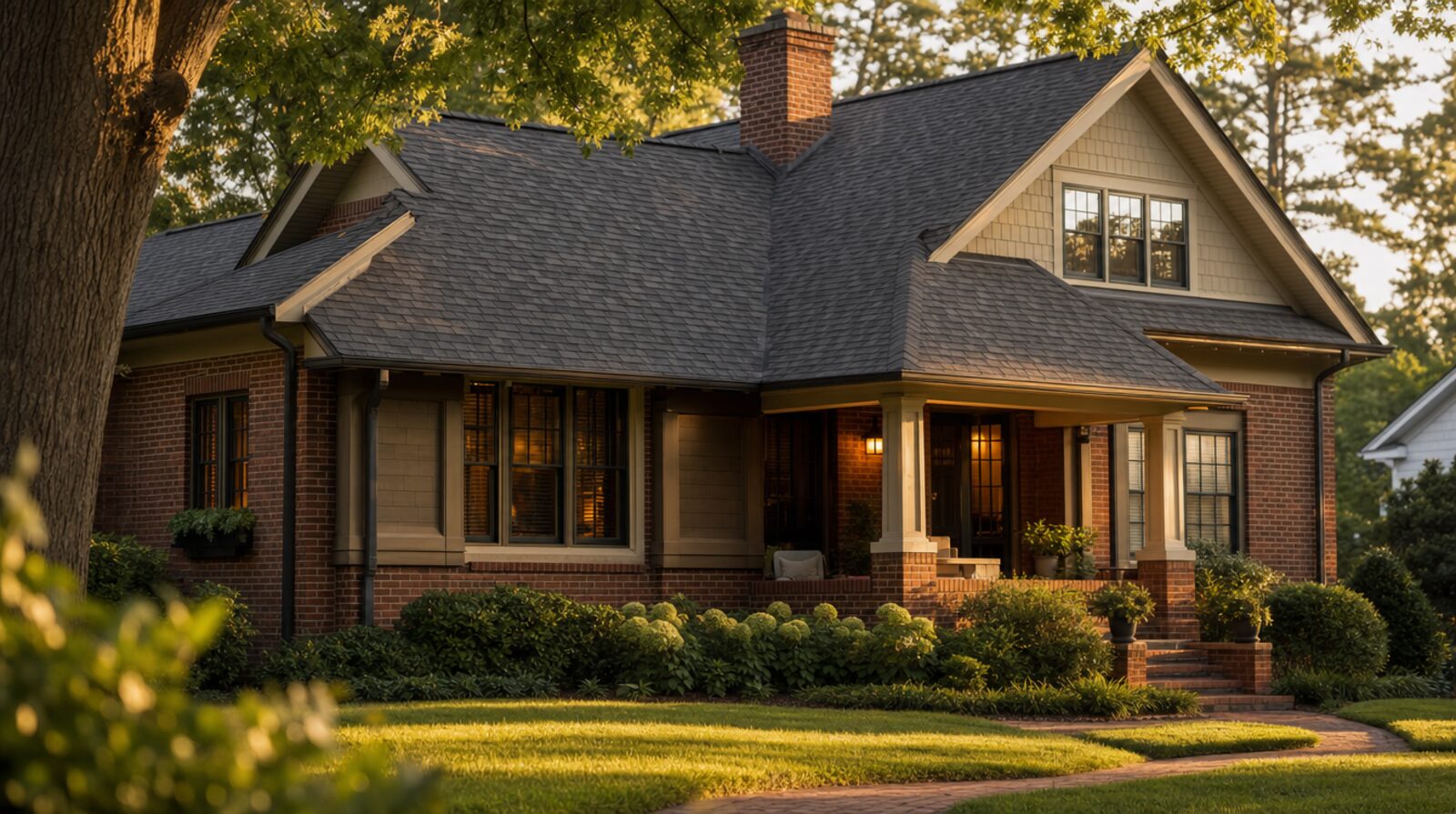
Most homeowners spend a week picking a paint color for one bedroom and about ten minutes picking a shingle color that will cover the largest surface of their house for the next couple of decades. That math doesn't add up. Roof color drives curb appeal more than almost any other single choice you'll make on the exterior, and unlike a bad paint color, you can't easily paint over a roof you regret.
We've walked roofs in every neighborhood from the older brick ranches around Greensboro to the newer craftsman-style builds going up outside Winston-Salem and High Point, and the pattern is consistent: the roofs that photograph well and sell fast aren't the boldest ones, they're the ones that fit the house and the block.
Start With Your House, Not the Shingle Sample Board
A shingle color that looks rich and warm on a 6x6 sample chip can read completely different across 2,000 square feet of roof plane in full sun. Before you pick anything, look at three things you already have:
- Brick or stone color. Piedmont Triad homes lean heavily on red, brown, and tan brick. Warm-toned brick generally pairs well with charcoal, weathered wood, or driftwood shingles rather than true black, which can fight with red undertones.
- Siding and trim. If your siding is a cool gray or greige, a warm brown shingle can look muddy next to it. Stay in the same temperature family — cool with cool, warm with warm — even if the shades themselves differ.
- Permanent fixtures. Stone chimneys, retaining walls, and driveway pavers don't change with trends. Your roof should complement those, not clash with them for the next 20-plus years.
A trick that works better than staring at a sample board on your kitchen counter: hold the sample outside, in daylight, against your actual brick or siding, morning and late afternoon. Piedmont sun angles low in the winter and roof color shifts noticeably between 9am shade and 3pm direct light.
Check Your HOA Before You Fall in Love With a Color
This is the step people skip and regret. A large share of newer developments around Summerfield, Oak Ridge, Clemmons, and the planned communities ringing Greensboro and High Point have architectural review committees with specific roofing rules. Before you commit to a color, pull your HOA's covenants or call the management company and ask:
- Is there an approved color list, or do you need pre-approval submitted with a sample?
- Are there restrictions on shingle style (architectural vs. three-tab) tied to color options?
- Is there a required match or contrast rule with neighboring homes?
- What's the review timeline? Some committees meet monthly, not weekly, and that can stall a project if a storm just took your roof and you're on an insurance clock.
We've had jobs held up a week or more because a homeowner ordered material before submitting for approval. Get the HOA sign-off in writing before the shingles show up on a delivery truck — reordering a different color after a partial tear-off is expensive and slows everyone down.
How Color Affects Resale Value
Appraisers don't put a line item on your report for "shingle color," but agents and buyers absolutely notice it, especially in listing photos where the roof frames the entire shot. A few things we've observed hold up across the Triad market:
- Neutral wins broad appeal. Charcoal gray, weathered wood, and driftwood tones consistently show the widest buyer appeal because they read as updated without dating the house to a specific trend.
- Match your street, don't fight it. A roof that's wildly different from every other home on the block can actually work against you in neighborhoods with strong architectural consistency — it reads as "the odd one out" rather than distinctive.
- Dark roofs show more contrast, light roofs show more dirt. Very light shingles can accentuate streaking from algae growth in our humid summers, while very dark shingles show more granule fade over time in direct southern exposure. Mid-tone colors tend to hide both issues longest.
- Age matters more than color at the sale. A neutral-colored roof at 8 years old will out-sell a trendy color at 18 years old every time. Don't let color chase distract from the more important resale question: does this roof have useful life left, and is that documented for the buyer?
A Few Practical Notes Before You Order
Ask to see a full-size shingle laid flat outdoors, not just the small color chip — the shadow lines and granule blend look different at scale. If your roof has a steep pitch or a lot of visible plane from the street, that's exactly where color choice matters most, since a low-slope roof in back barely shows from the curb. And if you're torn between two neutral options, go one shade darker than your instinct — sun fade over the first year or two will lighten most architectural shingles slightly from their box-fresh appearance.
Pick the color that still looks right in ten years, not just the one that looks best on install day.
If you're weighing options for your own home, it's worth walking your street first. Notice which roofs still look sharp after a decade and which ones look dated. That's usually a faster answer than any sample board.
Stop Guessing on Price
Get precise measurements and a detailed price range for your specific roof right now using our aerial measurement technology. No home visit required.
Get my price