 Back to Guides
Roof Maintenance Contracts: Are Annual Inspection Plans Worth It?


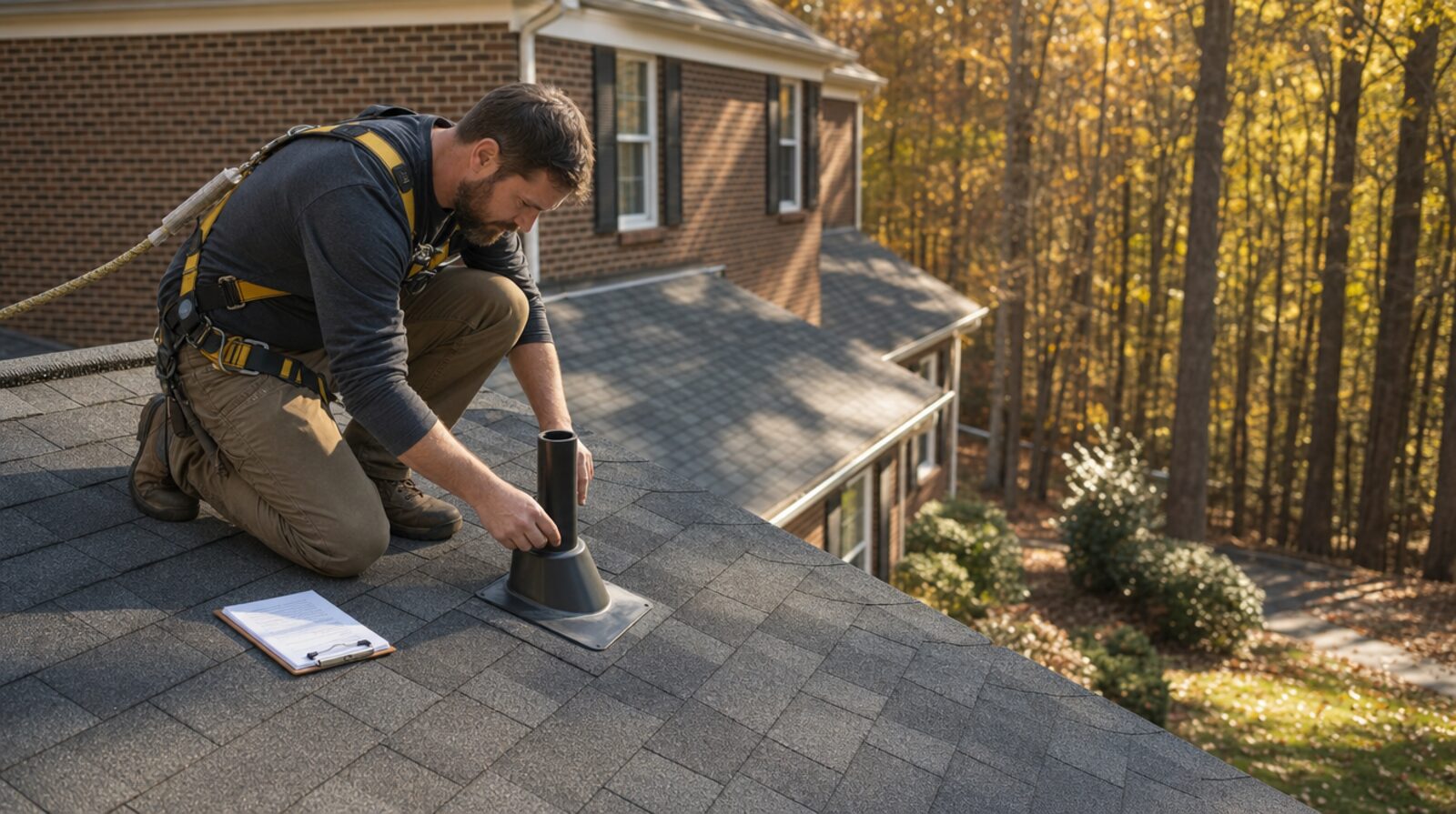
We get this question a lot, usually from a homeowner standing in their driveway holding a mailer that promises "peace of mind" for $199 a year. Roof maintenance contracts — sometimes called inspection plans or roof care programs — have become a common upsell in this industry, and like most upsells, some of them earn their keep and some of them don't. After climbing more roofs across Greensboro, High Point, and Winston-Salem than we can count, here's our honest take on when a plan pays for itself and when you're better off just calling someone twice a year.
What a Legitimate Maintenance Plan Actually Includes
Strip away the marketing language and a real inspection plan boils down to two scheduled visits a year — typically one in spring and one in fall — where a technician physically walks the roof, not just glances at it from the ladder. A visit worth paying for should cover:
- Shingle and flashing check. Looking for lifted, cracked, or missing shingles, and confirming flashing around chimneys, skylights, and sidewalls is still sealed.
- Sealant and pipe boot inspection. Rubber pipe boots are usually the first thing to fail on a NC roof — sun exposure cracks them in as little as 7-10 years, well before the shingles around them wear out.
- Gutter and downspout clearing. Especially after fall leaf drop and before winter freeze-thaw cycles, since clogged gutters back water up under the shingle edge.
- Attic ventilation and moisture check. A five-minute look in the attic tells you more about a roof's real condition than an hour on top of it — dark staining, damp insulation, or musty air are early warning signs most homeowners never see.
- Debris removal. Pine straw and leaf litter that collects in valleys holds moisture against the shingle mat and accelerates wear in exactly the spots that are hardest to inspect from the ground.
- A written report with photos. This is the part most cut-rate plans skip. If you're not getting documented findings after each visit, you're paying for a wave from the roofline, not an inspection.
If a plan you're evaluating doesn't spell out most of that list, ask what exactly you're paying for before you sign anything.
Where the Math Works in the Triad's Favor
Our climate is the argument for these plans, honestly. The Piedmont swings from summer humidity and afternoon thunderstorms to winter freeze-thaw cycles, and that back-and-forth is hard on roofing materials in ways a lot of homeowners don't think about until something fails. A few examples we see routinely:
- Water that gets under a lifted shingle in October can sit there through a freeze-thaw cycle in January and turn a $150 fix into $1,500 of decking replacement by spring.
- A pipe boot that starts cracking in year eight often isn't found until it's leaking into a ceiling — because nobody's looking at it in years 8, 9, and 10.
- Gutters clogged with oak and sweetgum leaves in November hold water against the fascia all winter, which rots wood that then has to be replaced along with the shingles above it.
None of these are dramatic failures. They're slow ones, which is exactly the kind of problem a twice-a-year set of eyes is good at catching and a once-a-decade "I'll deal with it when it leaks" approach is bad at catching.
The Break-Even Question
Most inspection plans in our market run somewhere in the range of what a single service call would cost anyway. So the real question isn't "is $200-$400 a year worth it" — it's "would I actually schedule two roof checkups a year on my own if I weren't paying for a plan that reminds me to?" For most people, the honest answer is no. Roofs are out of sight, and out of sight roofs get ignored until there's a stain on the ceiling.
When a Plan Isn't the Right Call
A maintenance contract isn't automatically the smart move for every roof or every homeowner. A few situations where we'd tell you to skip it:
- Roofs under about five years old. New roofing systems under warranty rarely need more than an annual eyeball check, and many contractors will do a courtesy walk-through in year one or two for free.
- Roofs near the end of their service life. If your shingles are past the 20-year mark and showing widespread granule loss or curling, you're better off putting that annual fee toward a replacement fund than paying to document decline you already know is happening.
- Plans that lock you into a single contractor for repairs at non-competitive rates. Some contracts bundle in "discounted" repair pricing that's actually padded above market rate. Read the repair pricing terms, not just the inspection terms.
- Auto-renewing plans with vague cancellation terms. If it's not clear how to get out, that's a sign the value proposition doesn't hold up on its own merits.
Questions to Ask Before You Sign
If a contractor pitches you an annual plan, these are the questions that separate a genuinely useful service from a subscription that just collects a check twice a year:
- Does someone physically get on the roof, or is this a ground-level or drive-by look?
- Do I get a written report with photos after each visit, and can I see a sample?
- Are minor fixes — resealing a boot, re-nailing a shingle — included, or is every finding a separate invoice?
- What happens to unused visits if I sell the house or cancel mid-term?
- Is gutter clearing included, or is that a separate line item?
A contractor who answers these plainly, without hedging, is one you can trust to actually show up and do the work. If the answers get vague, treat that as your answer.
Our Take
For a roof in the middle of its lifespan — say, five to fifteen years old, out of the newest-roof honeymoon period but nowhere near replacement — a solid twice-a-year inspection plan is genuinely one of the better-value things a homeowner can spend money on. It's cheap insurance against the slow, boring failures that turn into expensive ones, and it forces a habit — checking the roof — that almost nobody keeps up with on their own. Just make sure you're buying an actual inspection with hands-on-the-roof documentation, not a mailer with a nice font.
Stop Guessing on Price
Get precise measurements and a detailed price range for your specific roof right now using our AI technology. No home visit required.
Get my price