 Back to Guides
5 Questions to Ask Before Hiring Any Roofing Contractor


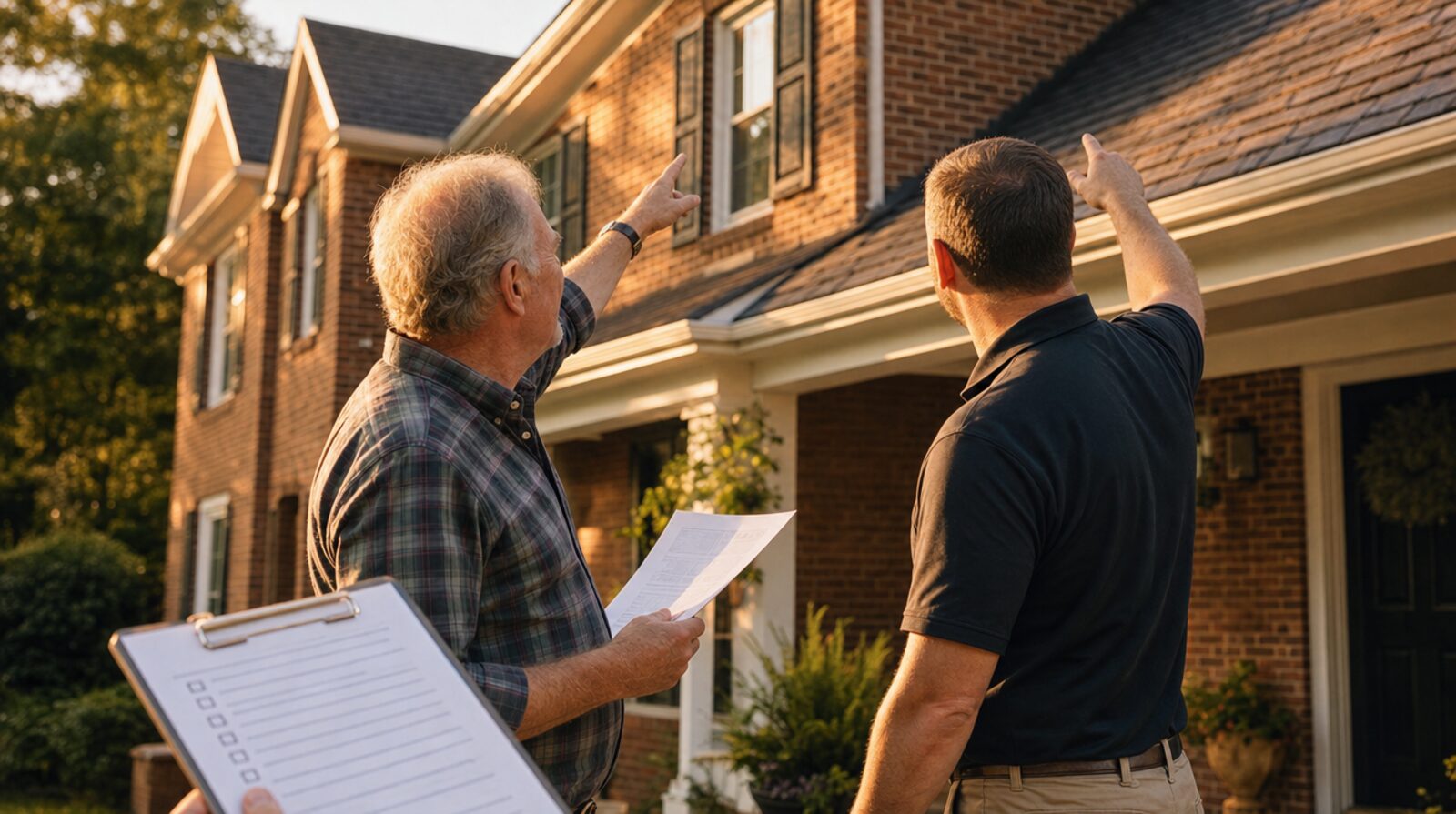
Every spring, after a run of hailstorms or heavy wind moves through the Piedmont Triad, the same thing happens: unfamiliar trucks show up in neighborhoods offering "free inspections" and same-day quotes. Some of those crews are legitimate. Many are gone before the first shingle starts to leak. Before you sign anything, ask the questions below. A contractor who has actually been doing this work in Greensboro, High Point, or Winston-Salem for any length of time will answer them without hesitating.
1. Are you licensed to work in North Carolina, and can I see it?
North Carolina requires a general contractor license for any roofing job valued at $30,000 or more. Ask for the contractor's license number and look it up yourself through the NC Licensing Board for General Contractors. A legitimate outfit will rattle the number off from memory — they use it constantly. If someone hesitates, changes the subject, or tells you licensing "doesn't really apply" to roofing, that's your answer.
2. What does your insurance actually cover, and will you send proof?
"We're insured" is not an answer — ask specifically for a certificate showing general liability and workers' compensation coverage, and have it sent directly to you (not just described verbally). Here's why this matters more than most homeowners realize: if an uninsured worker falls off your roof, the injury claim can follow the homeowner, not just the contractor. A real certificate of insurance names the carrier and the coverage limits, and any reputable company can email one in minutes because they keep it on file for exactly this reason.
While you're at it, ask how they protect your gutters, siding, landscaping, and driveway during tear-off. Falling debris and dropped nails are the most common source of small claims on a roofing job, and a contractor who has thought about it will already have a plan — tarps along the foundation, magnetic nail sweeps at the end of each day, plywood over vulnerable landscaping.
3. What's actually going on my roof, layer by layer?
A shingle brand name is not a roofing system. Ask the contractor to walk you through the full assembly, starting from the deck up: Are they replacing damaged decking as part of the base price, or is that a change order once they open things up? What underlayment are they using — synthetic or felt, and how many layers in valleys? What's the ice-and-water shield coverage at eaves and valleys, which matters even here in the Triad given our freeze-thaw swings in January and February? What ridge and soffit ventilation are they installing, and have they calculated your attic's intake versus exhaust balance, or are they just matching what's already there?
Ventilation in particular gets skipped constantly because it's invisible once the job is done, but poor attic airflow is one of the fastest ways to cook a shingle roof from underneath and void the manufacturer's coverage. If a contractor can't explain their ventilation plan in plain terms, they probably don't have one.
4. How do you handle a leak or a problem after the check clears?
This is the question that separates a business from a truck. Ask what their process is if you call eighteen months from now with a leak — do they come look at it, and is there a written warranty on the labor itself, separate from whatever coverage the shingle manufacturer provides on materials? Ask how long they've been operating under the same company name in this specific area, since "roofing" companies that rebrand every storm season are a well-known pattern around here. A local crew with an actual office and a truck that isn't magnetic-signed is easier to find in eighteen months than one that blew through your subdivision for a week.
It's also fair to ask for a few local references you can actually call — not just online reviews, which can be manufactured, but a neighbor or nearby homeowner whose roof they did in the past year or two.
A final word
None of these questions are complicated, and a contractor who's proud of their work will welcome them. If you get vague answers, pressure to sign today, or a quote that arrives suspiciously close to your insurance deductible, treat that as information. Roofing is one of the largest checks most homeowners write in a given decade — a few honest questions up front is a small price for peace of mind for the next twenty-plus years.
The best contractor for your roof is rarely the one who knocked on your door first. It's the one who answers every one of these questions without flinching.
Stop Guessing on Price
Get precise measurements and a detailed price range for your specific roof right now using our aerial measurement technology. No home visit required.
Get my price